
 By
·
9 minute read
By
·
9 minute read
Introduction: Learning From Others' Failures
Introduction: Learning From Others' Failures
You can learn from your own mistakes, but it's far more efficient to learn from other people's failures. Most websites make the same SEO mistakes repeatedly: targeting the wrong keywords, ignoring technical foundations, over-optimizing pages, or not measuring what matters. These mistakes don't just waste effort—they actively harm rankings and revenue.
This article catalogs the most destructive SEO mistakes, why they happen, and how to avoid or recover from them. Rather than generic "SEO tips," this focuses on the mistakes that kill growth—the decisions that seem smart in the moment but devastate your long-term SEO performance.
These mistakes become clear when you understand the full SEO framework outlined in the other four articles: "Keyword Research That Actually Converts," "On-Page SEO Checklist for Modern Websites," "Technical SEO Basics for Non-Developers," and "Measuring SEO Success Beyond Rankings." This article ties them together by showing what happens when you skip or misapply those principles.
Mistake 1: Chasing Volume Over Intent (The Biggest Keyword Error)
This mistake ruins more SEO strategies than any other: targeting keywords because they have high search volume, regardless of whether they match your business or what users actually want.
Why it happens:
-
Keyword tools show volume prominently; intent is invisible
-
"More traffic" feels like an obvious goal
-
Marketing managers focus on traffic metrics rather than revenue
Why it kills growth:
-
High-volume keywords usually have low conversion intent
-
You rank but visitors don't convert
-
You waste time competing for irrelevant traffic
-
Your content doesn't answer the actual search intent

The fix:
Read the search results for your target keyword. What type of content appears? Are they blog posts (informational) or product pages (transactional)? Does your content match that intent? If not, the keyword isn't a good fit, no matter the volume.
Link back to "Keyword Research That Actually Converts" for the complete framework on intent-first keyword selection.
Mistake 2: Keyword Stuffing (Optimization Taken Too Far)
Keyword stuffing is repeating your target keyword throughout content in unnatural ways, believing that more keywords = better rankings. Modern Google catches and penalizes this immediately.
Examples of keyword stuffing:
-
"Looking for the best SEO services? Our SEO services provide top SEO services for your SEO needs."
-
Repeating keywords in headers, footers, or hidden text
-
Keyword-heavy anchor text in internal links
Why it kills growth:
-
Google actively penalizes keyword stuffing
-
Users find it jarring and leave immediately
-
It signals desperation and low quality
-
It wastes opportunity to rank for variations and related keywords
The fix:
Aim for 0.5–1.5% keyword density. Write naturally. Trust that Google understands synonyms and variations. Your keyword doesn't need to appear in every sentence (or every paragraph).
Mistake 3: Ignoring Mobile Experience (Suicide in 2025)
With over 60% of searches on mobile and Google's mobile-first indexing, ignoring mobile is professional malpractice.
Common mobile mistakes:
-
Content that works on desktop but is unreadable on mobile
-
Mobile site significantly slower than desktop
-
Buttons/links too small to tap
-
Intrusive pop-ups that block content on mobile
-
Flash or other formats that don't work on mobile
Why it kills growth:
-
Google primarily indexes and ranks your mobile site
-
Mobile users bounce immediately if site is hard to use
-
Bounce rate signals poor quality to Google
-
You'll rank below mobile-optimized competitors
The fix:
Test your site on actual mobile devices, not just in browser DevTools. Use Google Mobile-Friendly Test. Ensure text is readable at actual size (no zooming required). Make buttons at least 48px tall. Keep load times under 3 seconds on 4G.
See "Technical SEO Basics for Non-Developers" for comprehensive mobile optimization guidance.
Mistake 4: Poor Site Architecture and Navigation
A site with a logical, shallow hierarchy is easier for users to navigate and for Google to crawl. Deep, disorganized structures waste crawl budget and confuse both users and search engines.
Poor architecture example:
domain.com/blog/category1/subcategory/post/2025/january/article-title/
Better architecture:
domain.com/blog/article-title/
Why it kills growth:
-
Deep pages get crawled less frequently
-
Users get lost in navigation
-
Link equity dilutes through too many levels
-
Crawl budget wasted on unnecessary pages

The fix:
Keep the most important pages within 2–3 clicks of the homepage. Organize logically by topic, not by date or author. Use breadcrumb navigation.
Mistake 5: Thin Content and Incomplete Pages
Publishing short, shallow content hoping to "cover" a topic and rank is a fool's errand. Google prefers comprehensive, authoritative content over thin pages.
Thin content examples:
-
300-word articles on topics that deserve 1,500+ words
-
Duplicate content from product descriptions on category pages
-
Pages with minimal unique value
-
Auto-generated or AI-written content with no human review
Why it kills growth:
-
Google doesn't index thin content reliably
-
Even if indexed, thin pages rank poorly
-
Users expect depth for competitive keywords
-
Thin content can trigger quality penalties
The fix:
Research top-ranking pages for your keyword. Make your content at least as comprehensive. Aim for 1,500+ words minimum for competitive keywords. Include examples, data, and unique perspectives competitors don't offer.
Mistake 6: Duplicate Content Without Canonical Tags
Duplicate content—whether across your own site or syndicated elsewhere—confuses Google about which version to rank.
Common duplicate content sources:
-
Product pages with multiple URLs (filters, parameters)
-
Blog posts accessible via multiple category URLs
-
Mobile and desktop versions
-
Content syndicated on multiple sites
-
HTTP and HTTPS versions of same page
Why it kills growth:
-
Google doesn't know which version to rank
-
Your ranking power splits across multiple URLs
-
You might rank for the wrong version
-
You waste crawl budget on duplicates
The fix:
Use canonical tags to tell Google which version is primary. Even on unique pages, add self-referencing canonical tags as best practice. For syndicated content, ask publishers to use canonical tags pointing back to your original.
Mistake 7: Neglecting Internal Linking (Wasting Authority)
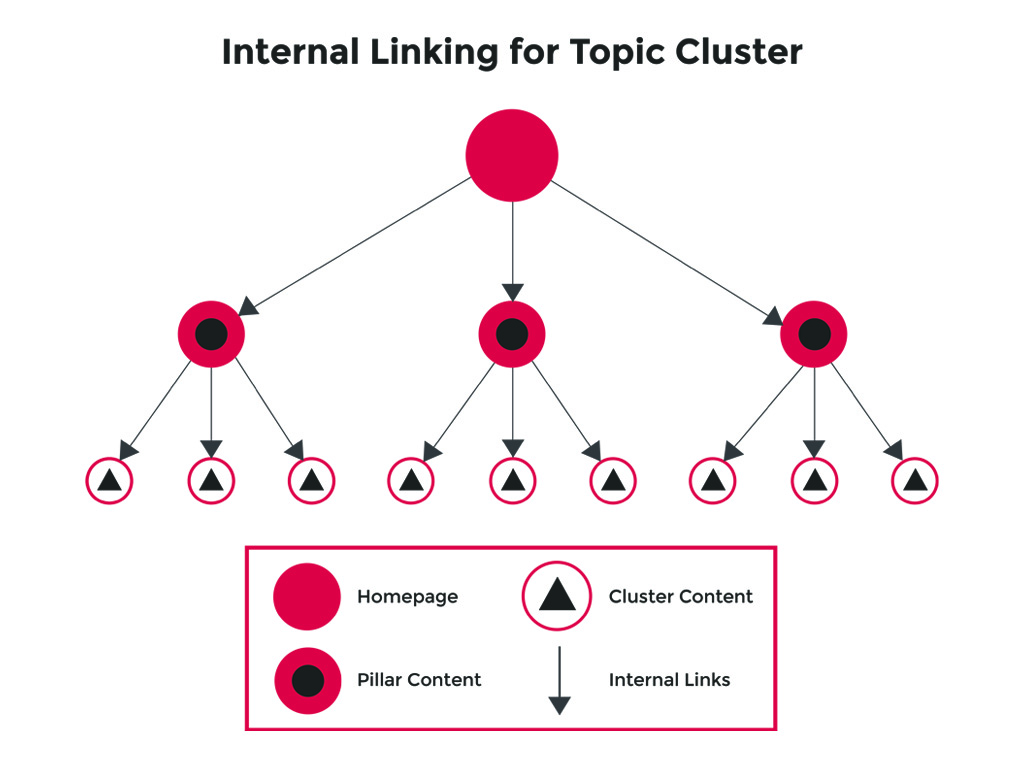
Internal links distribute page authority throughout your site and guide users through your funnel. Neglecting strategic internal linking leaves authority stuck on your homepage.
Internal linking mistakes:
-
Few internal links in content
-
Generic anchor text ("click here")
-
Random, unrelated links
-
No linking between related articles
-
Orphaned pages with no internal links
Why it kills growth:
-
Authority doesn't flow to money pages
-
Users don't discover related content
-
Google doesn't understand your site's hierarchy
-
Funnel opportunities missed
The fix:
Every page should have 2–5 strategic internal links. Use descriptive anchor text. Link supporting content to cornerstone pages. Create content clusters where articles link naturally to each other.
See "On-Page SEO Checklist for Modern Websites" for the complete internal linking strategy.
Mistake 8: Ignoring Technical SEO Foundation
Publishing great content on a technically broken site is like building a beautiful house on sand. Technical issues limit what great content can achieve.
Technical mistakes that kill growth:
-
Slow site speed
-
Poor mobile experience
-
Indexation issues (pages not indexed)
-
Crawlability problems (broken links, redirects)
-
Unresolved crawl errors
-
Missing schema markup
Why it kills growth:
-
Slow sites rank lower (Core Web Vitals are ranking factors)
-
Mobile-unfriendly sites fail in mobile-first world
-
Non-indexed pages can't rank
-
Bad user experience signals poor quality
The fix:
Run Google PageSpeed Insights quarterly. Check Google Search Console for indexation and crawl errors monthly. Implement Core Web Vitals monitoring.
See "Technical SEO Basics for Non-Developers" for how to diagnose and fix technical issues.
Mistake 9: Not Tracking Conversions (Flying Blind)
The most insidious mistake: optimizing for rankings without tracking what actually matters—conversions and revenue.
Tracking mistakes:
-
Only tracking traffic and rankings, ignoring conversions
-
Not connecting keyword rankings to revenue
-
Using vanity metrics (page views, bounce rate) instead of business metrics
-
Not attributing revenue to SEO properly
Why it kills growth:
-
You optimize for the wrong things
-
You can't justify SEO investment
-
You pursue high-traffic keywords that don't convert
-
You miss revenue-generating opportunities
-
You can't prove ROI to stakeholders
The fix:
Set up proper conversion tracking from day one. Connect Google Analytics to your CRM. Track: traffic by keyword, leads by keyword, revenue by keyword. Optimize based on actual business impact, not just rankings.
Mistake 10: Not Monitoring and Updating Existing Content
Content that was optimized well in 2020 may be outdated and underperforming in 2025. Successful SEO requires ongoing content refreshes.
Update mistakes:
-
Publishing once and never revisiting
-
Letting old data/examples decay
-
Not addressing new search intent
-
Ignoring performance data
-
Not matching competitor content improvements
Why it kills growth:
-
Outdated content loses rankings to fresher competitors
-
Users don't find old data credible
-
Opportunities to improve rankings lost
-
"Freshness" is a ranking factor
The fix:
Review top 20 traffic pages quarterly. Check if there's new data, updated examples, or changed intent. Refresh content if it's underperforming. Update dates and examples to signal freshness.
Mistake 11: Building Backlinks Without Relevance (Wasting Money)
Buying cheap backlinks or pursuing quantity over quality is a fast path to penalties.
Bad link-building practices:
-
Buying links from irrelevant directories
-
Participating in link schemes
-
Pursuing high-volume low-quality links
-
Ignoring link relevance
-
Building links to wrong pages
Why it kills growth:
-
Google penalizes unnatural backlink patterns
-
Irrelevant links don't help rankings
-
Link schemes trigger manual penalties
-
You waste money on links that don't work
The fix:
Focus on earning relevant links from authoritative sites. Create content worth linking to. Build relationships with publishers. Quality always beats quantity.
Mistake 12: Neglecting Local SEO (When It Matters)
If you serve a geographic area, ignoring local SEO means missing the most motivated, conversion-ready segment.
Local SEO mistakes:
-
Incomplete or inconsistent business information
-
Missing Google Business Profile optimization
-
No local content
-
No local citations
-
Ignoring reviews
Why it kills growth:
-
Local searches convert at higher rates
-
Google prioritizes local results for location intent
-
Missing reviews costs business
-
Incomplete info decreases trust
The fix:
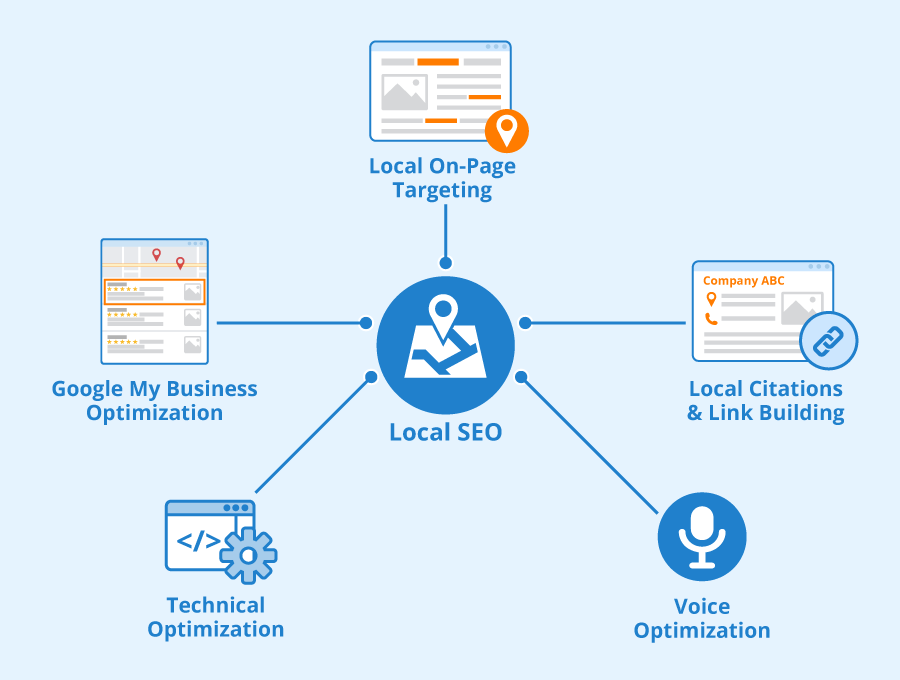
Claim and optimize Google Business Profile. Get consistent NAP (Name, Address, Phone) across all directories. Collect reviews. Create location-specific content.
Quick Takeaways
-
Chase intent, not volume: High-traffic keywords often don't convert; focus on commercial and transactional intent.
-
Keyword stuffing triggers penalties: Modern Google catches obvious over-optimization; write naturally.
-
Mobile is mandatory: 60%+ searches are mobile; Google primarily indexes mobile version.
-
Site architecture matters: Logical, shallow hierarchy improves crawlability, user experience, and link equity distribution.
-
Thin content doesn't rank: Aim for 1,500+ words on competitive topics; be comprehensive.
-
Canonical tags prevent duplicate content problems: Use them even on unique pages as best practice.
-
Internal linking distributes authority: Strategic internal links guide users and help Google understand your site's hierarchy.
-
Technical foundation is essential: Slow sites, mobile-unfriendly sites, and sites with crawl errors can't rank well no matter how good the content.
-
Track conversions, not just rankings: Optimize based on revenue impact, not traffic metrics.
-
Update content regularly: Outdated content loses rankings; refresh top performers quarterly.
-
Build relevant links: Quality matters far more than quantity; irrelevant links can harm your site.
-
Local SEO matters: If you serve a geographic area, optimize Google Business Profile and local citations.
Conclusion
SEO mistakes often come from misunderstanding fundamentals or chasing metrics that don't matter. The pattern is consistent: prioritize wrong metrics (volume over intent, traffic over conversions, quantity over quality), skip essential foundations (technical SEO, internal linking, tracking), or apply SEO concepts incorrectly (keyword stuffing, over-optimization, bad link building).
The antidote is understanding the complete SEO framework: research keywords with the right intent (Blog 1), optimize on-page elements thoughtfully (Blog 2), build technical foundations properly (Blog 3), avoid these pitfalls (Blog 4), and measure actual impact (Blog 5).
Most of these mistakes are recoverable if caught early. A site that's been doing keyword stuffing can be cleaned up. A site with technical issues can be fixed. Duplicate content can be consolidated. The key is recognizing the mistake, understanding why it's harmful, and correcting it systematically.
Your next step: Audit your site for the three mistakes most likely to be limiting your growth. Focus on one category (keyword targeting, content quality, technical foundation, tracking) and fix it completely before moving to the next.
Frequently Asked Questions About SEO Mistakes
Q1: If I've made these mistakes, can I recover?
A: Most mistakes are recoverable. Update thin content, remove bad links, fix technical issues, implement tracking. Recovery takes time (usually 2–3 months), but it works. Don't make the same mistake again.
Q2: How do I know if my site has been penalized?
A: Check Google Search Console for manual penalties (Admin > Manual penalties). For algorithmic penalties, watch for sudden traffic drops after Google updates. Poor recovery is often more effective than trying to identify a specific penalty.
Q3: Is some duplicate content okay?
A: Minor duplication is normal (faceted navigation, product variations). Use canonical tags to manage it. Intentional duplication to game rankings is not okay.
Q4: How much do backlinks matter compared to these other factors?
A: Backlinks are still important, but they're not the only factor. Poor execution of on-page SEO, content quality, and technical fundamentals will limit your rankings even with great backlinks.
Q5: How often should I audit my site for these mistakes?
A: Audit quarterly. Check specifically for: indexation issues (monthly), technical problems (monthly), content freshness (quarterly), link quality (quarterly).
Q6: Can I ignore local SEO if I serve multiple areas?
A: If you serve any geographic area, local SEO matters. Even if you serve nationally, create location-specific content and optimize for location-specific keywords.
Keep Reading: Complete Your SEO Strategy
This mistakes guide is strongest with:
-
"Keyword Research That Actually Converts" – Do this right from the start
-
"On-Page SEO Checklist for Modern Websites" – Optimize properly, not excessively
-
"Technical SEO Basics for Non-Developers" – Build solid foundations
-
"Measuring SEO Success Beyond Rankings" – Track the right metrics
References
Google Search Central. (2025). Manual Actions. Retrieved from https://search.google.com/search-console
Backlinko. (2025). Google Ranking Factors. Retrieved from https://backlinko.com/google-ranking-factors
Semrush. (2025). Common SEO Mistakes. Retrieved from https://www.semrush.com/blog/common-seo-mistakes/
Moz. (2025). SEO Mistakes to Avoid. Retrieved from https://moz.com/learn/seo/mistakes
Search Engine Journal. (2025). SEO Problems and Solutions. Retrieved from https://www.searchenginejournal.com/
Neil Patel. (2025). Most Common SEO Mistakes. Retrieved from https://neilpatel.com/blog/common-seo-mistakes/
HubSpot. (2025). SEO Best Practices Guide. Retrieved from https://blog.hubspot.com/marketing/seo
Yoast. (2025). Common SEO Mistakes. Retrieved from https://yoast.com/seo-mistakes/
You can learn from your own mistakes, but it's far more efficient to learn from other people's failures. Most websites make the same SEO mistakes repeatedly: targeting the wrong keywords, ignoring technical foundations, over-optimizing pages, or not measuring what matters. These mistakes don't just waste effort—they actively harm rankings and revenue.
This article catalogs the most destructive SEO mistakes, why they happen, and how to avoid or recover from them. Rather than generic "SEO tips," this focuses on the mistakes that kill growth—the decisions that seem smart in the moment but devastate your long-term SEO performance.
These mistakes become clear when you understand the full SEO framework outlined in the other four articles: "Keyword Research That Actually Converts," "On-Page SEO Checklist for Modern Websites," "Technical SEO Basics for Non-Developers," and "Measuring SEO Success Beyond Rankings." This article ties them together by showing what happens when you skip or misapply those principles.