
 By
·
14 minute read
By
·
14 minute read
Introduction
Search engine optimization (SEO) has evolved dramatically over the past few years, and understanding how to navigate this complex landscape is essential for anyone looking to increase organic traffic and visibility online. Whether you're a business owner, content creator, or digital marketer, a solid SEO strategy can be the difference between obscurity and prominence in search results. The fundamentals of SEO remain rooted in three core principles: helping search engines crawl and understand your content, providing genuine value to your audience, and building authority through quality signals. In 2025, the challenge isn't just about implementing SEO tactics—it's about understanding why these tactics work and how to adapt them to your unique business goals.
This comprehensive guide walks you through every essential aspect of modern SEO strategy, from keyword research to technical optimization, content creation, and link building. By the end, you'll have a clear roadmap for improving your search visibility and driving more qualified traffic to your website.
What Is SEO and Why Does It Matter?
Search engine optimization is the systematic process of improving your website's visibility in organic (unpaid) search results. Unlike paid search advertising, which requires ongoing investment, SEO focuses on earning visibility through relevance, authority, and user experience. When someone searches for information related to your business, products, or services on Google, Bing, or other search engines, SEO is what determines whether your website appears on the first page of results.
The importance of SEO cannot be overstated. Approximately 68% of online experiences begin with a search engine, and the first three organic results capture the majority of clicks. A strong SEO strategy ensures that your website is positioned in front of people actively searching for solutions you provide. Moreover, SEO is a long-term investment that continues to pay dividends. Unlike paid advertising, which stops driving traffic the moment you stop paying, organic traffic from SEO can persist and even grow over time as your authority increases.
H3: The Evolution of SEO in 2025
SEO has transformed significantly from the keyword-stuffing era of the early 2000s. Today, Google's algorithm prioritizes E-E-A-T (Experience, Expertise, Authoritativeness, and Trustworthiness) and user-focused signals over raw keyword density. Search engines now evaluate how well your content answers user intent, how fast your site loads, whether it's mobile-friendly, and whether other authoritative websites vouch for your credibility through backlinks.
The rise of AI-powered search tools and voice search has further shifted the SEO landscape. Content must now be optimized for conversational queries, structured data must be implemented to help AI understand your content, and websites must deliver exceptional user experiences across all devices. Additionally, Google's Core Web Vitals—measuring loading performance, interactivity, and visual stability—have become ranking factors that directly impact your visibility.
H2: The Three Pillars of Modern SEO Strategy
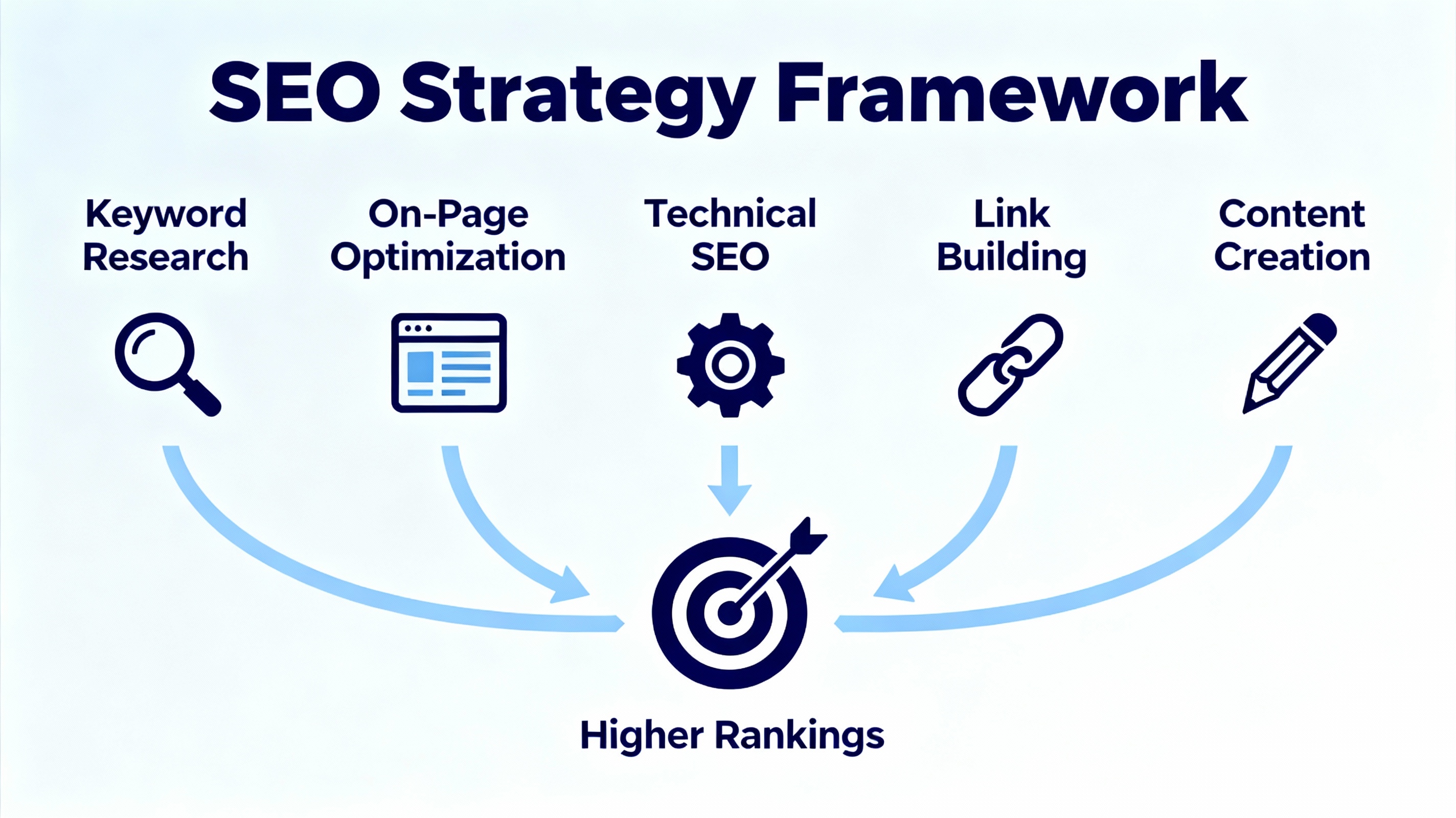
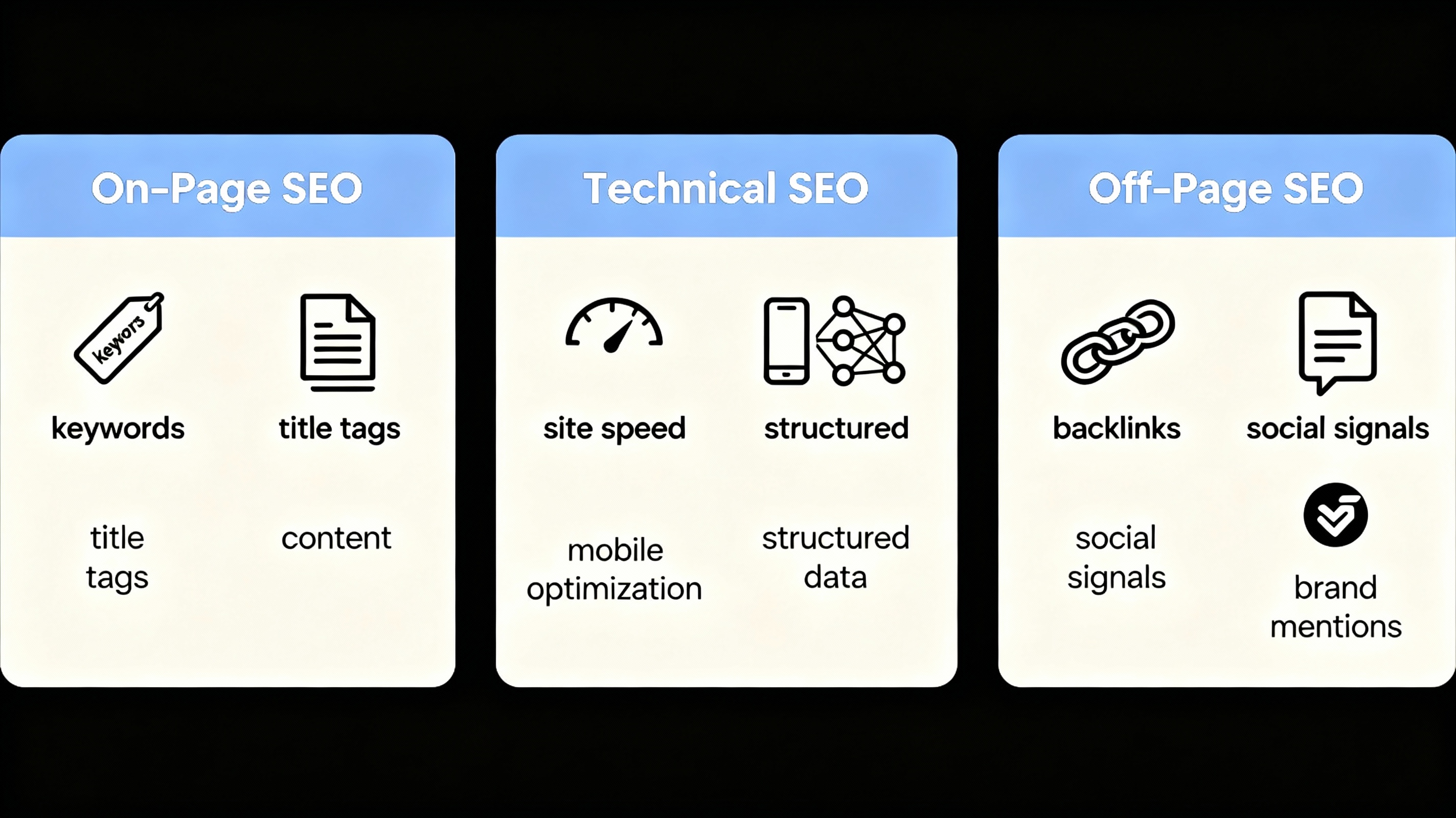
A comprehensive SEO strategy rests on three interconnected pillars: on-page SEO, technical SEO, and off-page SEO. Understanding how each pillar works and how they interact is crucial for developing an effective optimization plan.
H3: On-Page SEO: Optimizing Your Content and Pages
On-page SEO refers to all the elements you control directly on your website to improve rankings. This includes your content, HTML tags, URL structure, and internal linking strategy.
Key on-page SEO elements include:
-
Title Tags: Each page should have a unique, compelling title that includes your primary keyword and appeals to searchers. Keep titles under 60 characters for optimal display in search results.
-
Meta Descriptions: Write 150-160 character descriptions that summarize page content and naturally include target keywords. While not a direct ranking factor, compelling meta descriptions improve click-through rates.
-
Header Tags (H1, H2, H3): Use a single H1 per page for your main topic, then organize content with descriptive subheadings that include relevant keywords.
-
Content Optimization: Create comprehensive, high-quality content that thoroughly addresses user intent. Target keyword density should remain between 1-2% for your primary keyword, with natural integration of long-tail keywords and semantic variations throughout.
-
URL Structure: Keep URLs clean, readable, and descriptive. For example,
domain.com/seo-strategy-guideis better thandomain.com/page123. Include your target keyword when relevant. -
Image Optimization: Use descriptive file names (seo-strategy-framework.png) and write detailed alt text that describes the image. Compress images to improve page load speed without sacrificing quality.
-
Internal Linking: Strategically link to other relevant pages on your site using descriptive anchor text. This helps distribute link equity, establishes site hierarchy, and keeps users engaged longer on your site.
H3: Technical SEO: Building a Foundation for Success
Technical SEO ensures that search engines can effectively crawl, render, and index your website while delivering excellent performance to users.
Essential technical SEO components:
-
Site Speed and Performance: Page load speed is a critical ranking factor. Compress images, minimize CSS and JavaScript, enable browser caching, and leverage Content Delivery Networks (CDNs) to ensure fast loading times across all devices.
-
Mobile-First Optimization: With over 60% of searches now happening on mobile devices, Google prioritizes the mobile version of your site for ranking and indexing. Ensure responsive design, readable font sizes, easily tappable buttons, and a streamlined mobile experience.
-
Core Web Vitals: Monitor and optimize three key metrics:
-
Largest Contentful Paint (LCP): Time until the main content loads
-
First Input Delay (FID): Responsiveness when users interact with your site
-
Cumulative Layout Shift (CLS): Visual stability as the page loads
-
-
XML Sitemaps and Robots.txt: Submit an XML sitemap to Google Search Console to help search engines discover all your important pages. Use robots.txt to guide crawlers on which pages to prioritize and which to skip.
-
Structured Data Markup (Schema): Implement schema.org markup to help search engines better understand your content. This can lead to rich snippets—enhanced search results showing ratings, prices, FAQs, and more.
-
HTTPS and Security: Always use HTTPS (SSL encryption) to protect user data and improve trust signals. Google explicitly considers this a ranking factor.
-
Crawl Budget Management: For larger websites, ensure that your most important pages are being crawled frequently. Fix crawl errors, remove redirect chains, and eliminate blocked resources that prevent search engines from fully understanding your site.
H3: Off-Page SEO: Building Authority and Trust
Off-page SEO involves strategies outside your website that influence how search engines perceive your authority and relevance. The most critical off-page factor is backlinks—links from other websites to yours.
Key off-page SEO strategies:
-
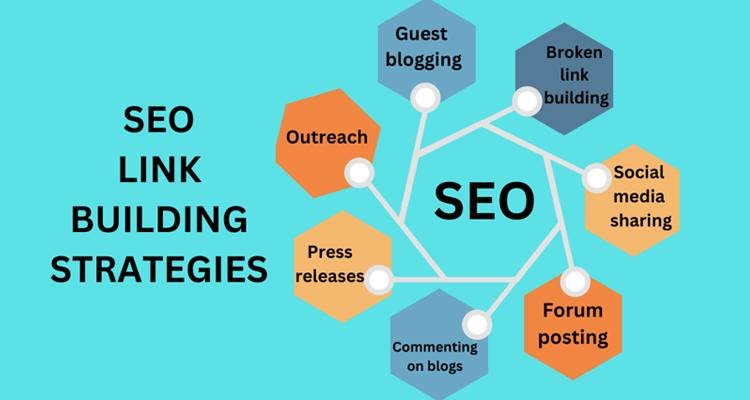
Link Building: Acquire high-quality backlinks from relevant, authoritative websites in your niche. Focus on earning links from content that ranks for valuable keywords rather than pursuing quantity over quality.
-
Guest Posting: Write articles for reputable websites in your industry and include a link back to your site. This not only builds backlinks but also establishes your expertise to new audiences.
-
Broken Link Building: Find broken links on relevant websites and reach out to webmasters offering your content as a replacement. This creates a win-win situation that naturally attracts backlinks.
-
Social Media Engagement: While social signals aren't direct ranking factors, an active social presence amplifies your content reach, increases brand awareness, and can lead to natural backlinks when your content is shared widely.
-
Brand Mentions: Earn mentions of your brand across the web, even without direct links. Search engines increasingly value these unlinked brand references as credibility signals.
-
Local Citations and Directories: If your business serves a local area, ensure your business information is consistent across local directories, review sites, and Google Business Profile.
H2: Developing Your SEO Strategy: A Step-by-Step Approach
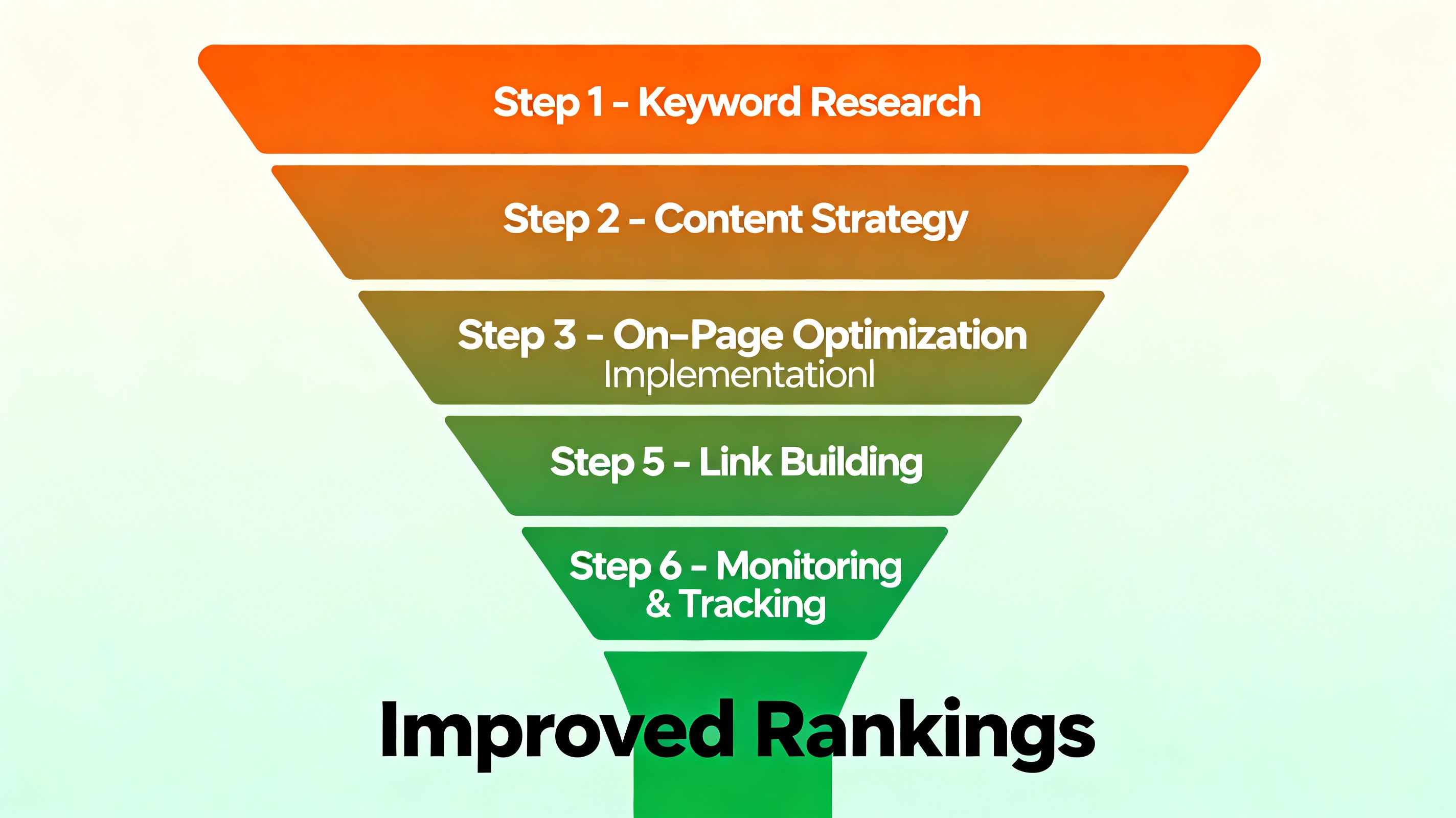
H3: Step 1 – Conduct Thorough Keyword Research
Keyword research is the foundation of any effective SEO strategy. It involves identifying the search terms your target audience uses to find products, services, or information related to your business.
Best practices for keyword research:
-
Start with Seed Keywords: Begin with broad terms related to your industry, then expand to more specific variations using tools like Google Keyword Planner, Semrush, Ahrefs, or SEMrush. These tools provide search volume, competition level, and intent data.
-
Prioritize Long-Tail Keywords: Long-tail keywords are longer, more specific phrases with lower search volume but higher conversion intent. For example, "sustainable yoga mat for outdoor use" converts better than just "yoga mat," even though fewer people search for it.
-
Analyze Search Intent: Understand whether people searching for a keyword are looking for information (informational), to buy something (transactional), or to find a specific website (navigational). Match your content to this intent.
-
Assess Keyword Difficulty: Evaluate how competitive it would be to rank for each keyword. Focus on keywords where you have a realistic chance to rank based on your domain authority and resources.
-
Create Keyword Lists by Topic: Group related keywords into topic clusters. This approach helps you develop comprehensive content that targets multiple related keywords naturally.
Tools that make keyword research easier:
-
Google Keyword Planner (Free)
-
Semrush Keyword Magic Tool
-
Ahrefs Keywords Explorer
-
KWFinder
-
Google Trends for seasonal keywords
H3: Step 2 – Analyze Top-Ranking Content
Before creating content, analyze the pages currently ranking for your target keywords. This reveals what type of content, format, depth, and structure Google prefers for that search query.
What to analyze:
-
Content Format: Are the top results blog posts, video content, infographics, tools, or something else?
-
Content Length: What's the typical word count of top-ranking pages? While there's no magic number, comprehensive content often performs better.
-
Structure and Headings: How are top-ranking pages organized? What heading hierarchy do they use?
-
Unique Angles: What perspectives or information do the top results provide that you could improve upon?
-
Visual Elements: Do successful pages include images, charts, videos, or interactive elements?
H3: Step 3 – Create a Content Strategy and Topic Cluster
Rather than publishing random blog posts, develop a strategic content plan organized around topic clusters. This involves creating a comprehensive pillar page on a broad topic, then supporting it with detailed cluster content on related subtopics.
Benefits of topic clusters:
-
Establishes topical authority in your niche
-
Improves crawlability and internal linking structure
-
Helps users find related content on your site
-
Increases the chances of capturing multiple related keywords
-
Signals relevance to search engines about your expertise area
Example topic cluster for SEO:
-
Pillar Page: Complete SEO Strategy Guide
-
Cluster Content:
-
Keyword Research Guide
-
On-Page SEO Checklist
-
Technical SEO for Beginners
-
Link Building Strategies
-
Mobile SEO Optimization
-
Step 4 – Optimize Your Content for SEO and Users
Writing content that ranks requires balancing what search engines want with what your human readers need.
Content optimization best practices:
-
Write for Your Audience First: Your primary goal is to solve real problems or answer genuine questions your audience has. Include practical examples, actionable steps, and relevant data.
-
Incorporate Keywords Naturally: Place your primary keyword in the title, first 100 words, a heading, and throughout the content at a natural frequency (1-2%). Use related keywords and semantic variations to provide context.
-
Use Descriptive Headings: Heading tags should be informative and include relevant keywords when appropriate. They help both users and search engines understand your content structure.
-
Optimize for Readability:
-
Use short paragraphs (2-3 sentences)
-
Include bullet points and numbered lists
-
Use bolding to highlight key phrases
-
Include descriptive subheadings
-
Add whitespace between sections
-
-
Provide Comprehensive Coverage: Go deeper than competitor content. Include case studies, statistics, expert quotes, and original data when possible.
-
Add Multimedia Elements: Include images with descriptive alt text, videos, infographics, and interactive elements. These improve user engagement and often lead to better rankings.
Step 5 – Implement Technical Optimization
Once your content is optimized, ensure the technical foundation is solid.
Technical optimization checklist:
-
Implement responsive design for mobile compatibility
-
Optimize Core Web Vitals using tools like Google PageSpeed Insights
-
Set up SSL/HTTPS encryption
-
Create and submit XML sitemaps
-
Optimize robots.txt file
-
Implement structured data markup (Schema.org)
-
Enable compression and caching
-
Fix crawl errors and broken links
-
Remove duplicate content using canonical tags
-
Optimize image file sizes and formats
Step 6 – Build High-Quality Backlinks
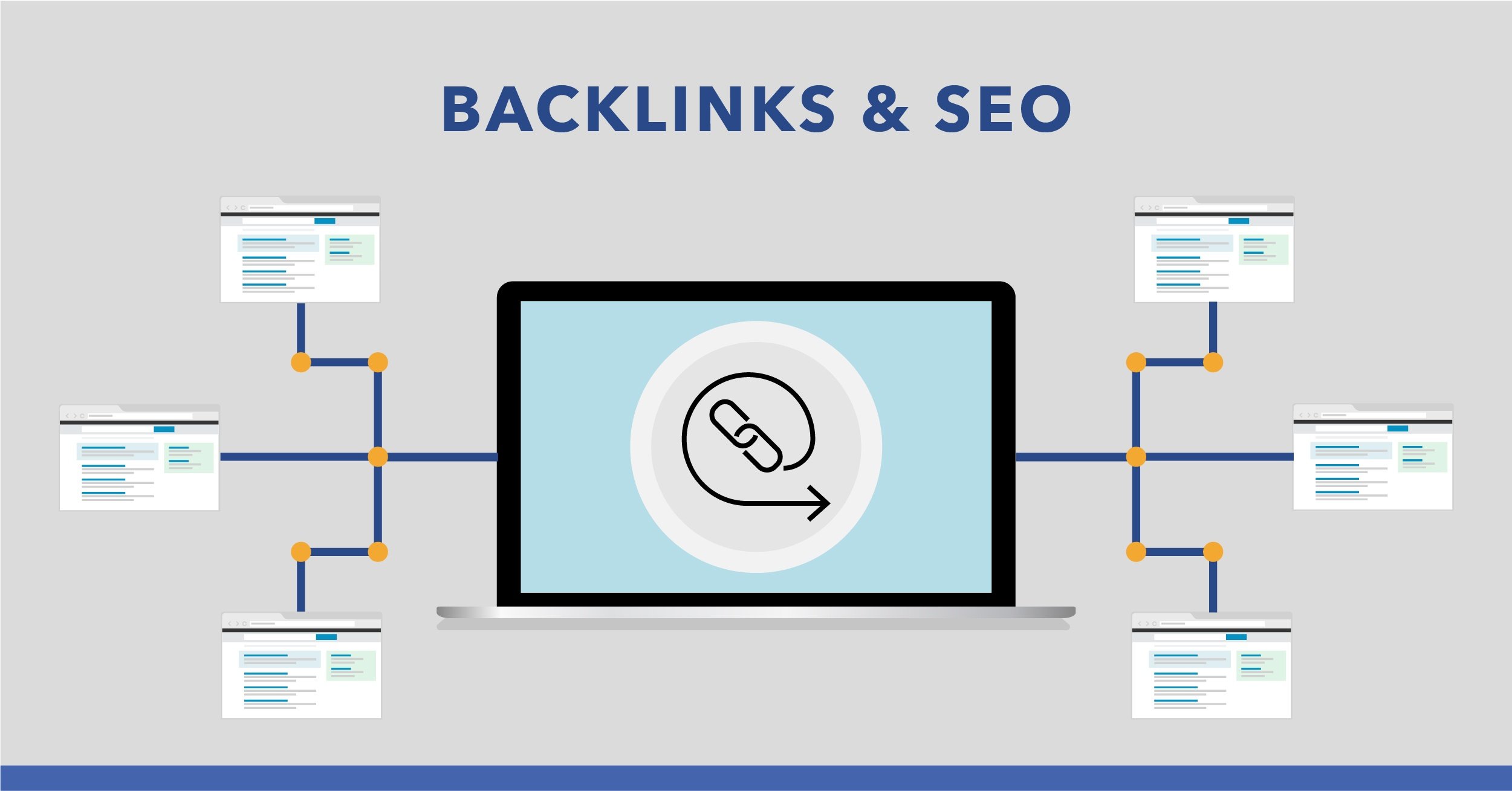
Link building remains one of the most important ranking factors. Focus on earning links from relevant, authoritative websites rather than purchasing links from low-quality directories.
Effective link-building strategies for 2025:
-
Create Linkable Assets: Develop original research, comprehensive guides, infographics, or tools that are so valuable others naturally want to link to them.
-
Guest Posting: Write authoritative articles for reputable websites in your industry and include a link back to your site. Ensure the content is genuinely valuable to their audience.
-
Resource Pages and Roundups: Create curated lists of helpful resources for your audience. Reach out to mentioned companies/websites—many will link to the page.
-
Broken Link Building: Identify broken links on relevant websites, create superior replacement content, and notify webmasters with your content as an alternative.
-
Skyscraper Technique: Find popular, well-linked content in your niche, create an improved version, then reach out to sites linking to the original with your better resource.
-
Strategic PR and Outreach: Build relationships with journalists, bloggers, and influencers in your space. Newsworthy updates about your business can earn natural backlinks.
-
Local Link Building: If you have a local business, get featured in local news, sponsor community events, and earn links from local business associations.
Quality over quantity: Focus on acquiring links from fewer high-authority, relevant sites rather than many low-quality links. One link from a trusted industry leader is worth more than ten links from unrelated low-authority sites.
SEO for Voice Search and AI-Powered Search
Voice queries are fundamentally different from typed searches. They're typically longer, more conversational, and often phrased as questions.
Voice search optimization strategies:
-
Target Conversational Keywords: Instead of "best coffee shops NYC," target "What are the best coffee shops near me in New York City?"
-
Create FAQ Sections: Voice assistants frequently pull answers from featured snippets. Include FAQ sections that directly answer common questions in your industry.
-
Optimize for Featured Snippets: Structure your content to appear in featured snippets by providing concise, direct answers to common questions.
-
Focus on Local SEO: Since 46% of voice searches have local intent, optimize your Google Business Profile, ensure NAP (Name, Address, Phone) consistency, and create location-specific content.
-
Prioritize Mobile: Nearly all voice searches happen on mobile devices. Ensure your website is fully optimized for mobile users with fast loading times and a responsive design.
-
Use Natural Language: Write in a conversational tone that mirrors how people actually speak, not how they type.
Mobile-First SEO Strategy
-
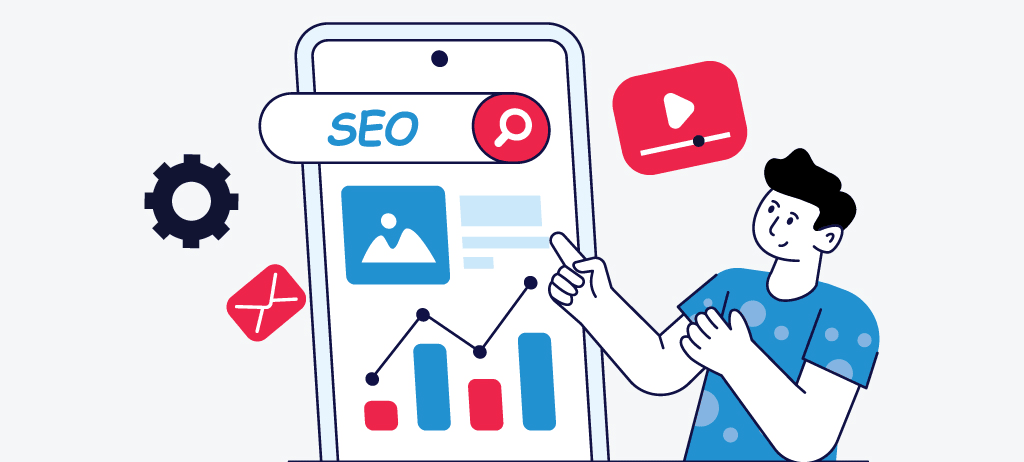
Responsive Design: Ensure your website automatically adapts to all screen sizes without the need for separate URLs.
-
Page Speed: Mobile users expect fast-loading pages. Minimize file sizes, leverage lazy loading, and use modern image formats like WebP.
-
Touch-Friendly Elements: Make buttons, links, and interactive elements large enough to tap easily without accidentally clicking adjacent elements.
-
Readable Text: Use font sizes that are easily readable on mobile without requiring users to zoom.
-
Mobile Navigation: Implement clear, intuitive navigation using hamburger menus or other mobile-friendly patterns. Avoid pop-ups and interstitials that block content.
-
Optimize Core Web Vitals on Mobile: Monitor and improve LCP, FID, and CLS specifically on mobile devices.
Common SEO Mistakes to Avoid
-
Keyword Stuffing: Overusing your target keyword makes content sound unnatural and can trigger Google penalties. Maintain 1-2% keyword density and focus on natural language.
-
Targeting Wrong Keywords: Not all keywords are valuable for your business. Prioritize keywords with commercial intent that align with your offerings and target audience.
-
Ignoring Search Intent: Creating content that doesn't match what searchers actually want will fail to convert even if you rank.
Content Mistakes
-
Thin or Duplicate Content: Google penalizes low-quality, duplicated, or plagiarized content. Each page should provide unique value. If you have duplicate content, use canonical tags or 301 redirects.
-
Ignoring User Experience: Content must be engaging, well-structured, and easy to scan. Long walls of text with no breaks frustrate users and increase bounce rates.
-
Publishing Irrelevant Content: Mixing unrelated topics on your website confuses search engines about your expertise. Maintain topical consistency.
-
Not Updating Old Content: Refresh your evergreen content regularly with new data, statistics, and examples to maintain relevance and rankings.
Technical SEO Mistakes
-
Poor Site Speed: Slow websites hurt both user experience and SEO. Test your site regularly with Google PageSpeed Insights and address performance issues.
-
Not Mobile-Friendly: A non-responsive design loses mobile searchers. Ensure your site works beautifully on all devices.
-
Missing Meta Tags: Skipping title tags and meta descriptions means missing opportunities to communicate with searchers before they click your result.
-
Broken Links and 404 Errors: Regularly audit your site for broken links. Implement 301 redirects for pages you've removed rather than leaving 404s.
Link Building Mistakes
-
Over-Optimized Anchor Text: Using exact-match keywords in too many backlinks looks unnatural and can trigger penalties. Use varied, natural anchor text.
-
Quantity Over Quality: Acquiring many low-quality backlinks is less effective (and more risky) than earning fewer high-quality links from authoritative, relevant sources.
-
Buying Links: Purchased links violate Google's guidelines and risk manual penalties. Focus on earning links through quality content and genuine relationships.
Local SEO Strategy
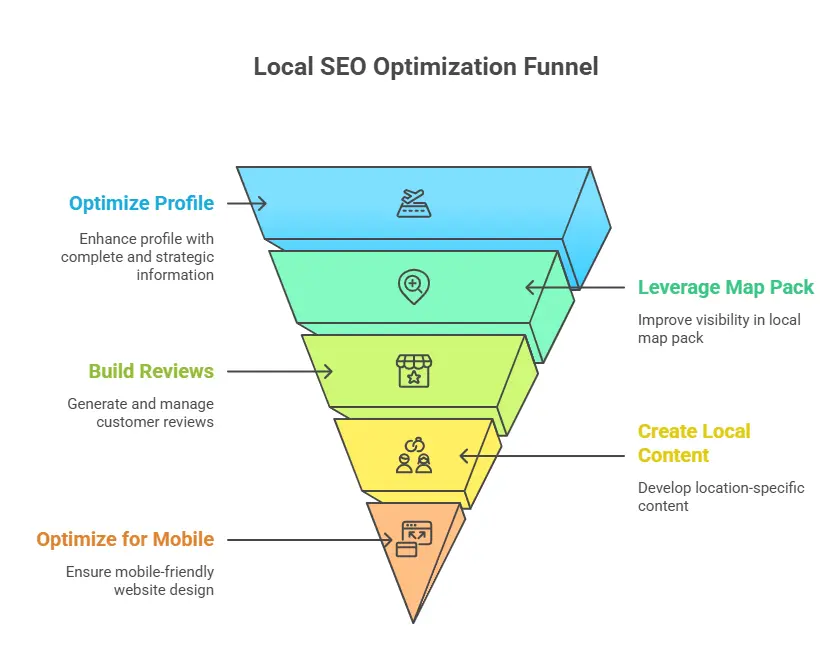
If your business serves a specific geographic area, local SEO is essential for attracting nearby customers.
Key Local SEO Tactics
-
Optimize Google Business Profile: Claim and complete your Google Business Profile with accurate information, photos, services, and regular updates. This directly impacts visibility in local pack results.
-
Build Local Citations: Ensure your business appears consistently (Name, Address, Phone number) across local directories, review sites, and online listings.
-
Create Location-Specific Content: Develop content targeting your service areas using hyper-local keywords and addressing community-specific topics.
-
Earn Local Backlinks: Get links from local news outlets, business associations, chambers of commerce, and community organizations.
-
Encourage Reviews: Positive reviews on Google, Yelp, and industry-specific review sites boost local rankings and build trust with potential customers.
-
Use Location-Based Keywords: Incorporate geographic keywords naturally in your titles, headings, content, and metadata.
Quick Takeaways
-
SEO is a long-term investment that creates sustainable organic traffic and builds credibility with your audience.
-
Three pillars support all SEO: on-page optimization (content, tags, structure), technical SEO (speed, mobile, crawlability), and off-page SEO (backlinks, authority, brand signals).
-
Keyword research forms the foundation of your strategy—target keywords with good search volume, reasonable competition, and clear commercial intent.
-
Content must satisfy both users and search engines—write for your audience first, then optimize for search engines with natural keyword integration and technical best practices.
-
Quality backlinks from authoritative sources remain one of the strongest ranking factors—focus on earning links through valuable content and genuine relationships.
-
Mobile optimization is non-negotiable with Google's mobile-first indexing and the majority of searches happening on mobile devices.
-
Voice search requires different optimization tactics—focus on conversational keywords, featured snippets, and local SEO for location-based queries.
-
Avoid common mistakes like keyword stuffing, publishing duplicate content, ignoring technical SEO, and pursuing low-quality backlinks.
Conclusion
Building an effective SEO strategy in 2025 requires understanding how search engines work, what your audience is looking for, and how to balance technical optimization with genuine value creation. The most successful websites aren't those that chase algorithm changes—they're those that consistently create high-quality content, maintain excellent user experiences, and build authority through genuine relationships and backlinks.
Start by auditing your current website's SEO performance, identifying your most valuable target keywords, and developing a comprehensive content strategy organized around topic clusters. Invest in technical optimization to ensure search engines can crawl and index your site effectively, then focus on earning high-quality backlinks from authoritative sources in your niche. Remember that SEO is a marathon, not a sprint. Results take time, but the organic traffic and credibility you build compound over months and years.
The strategies outlined in this guide represent the current best practices from leading SEO authorities. Implement them systematically, monitor your progress using Google Search Console and Analytics, and adjust your approach based on real data. Your competitors may be ahead today, but with a solid SEO strategy and consistent execution, you can improve your visibility, attract more qualified traffic, and ultimately grow your business through organic search.
Start your SEO journey today by conducting keyword research for your highest-priority topics, analyzing what's currently ranking in search results, and creating your first pillar piece of content. The time you invest in SEO now will pay dividends for years to come.
Frequently Asked Questions About SEO
Q1: How long does it take to see results from SEO?
A: SEO is a long-term strategy. Most websites see meaningful improvements in 3-6 months, but significant results typically take 6-12 months or longer. The timeline depends on your industry's competitiveness, your website's current authority, and how aggressively you pursue optimization. New websites take longer than established ones, but patience and consistency always pay off.
Q2: Is SEO better than paid advertising?
A: Both have their place. SEO builds long-term, sustainable traffic and costs less per click over time, but requires significant upfront investment in content and optimization. Paid advertising delivers immediate results and gives you precise targeting control. Many successful websites use both strategies—paid ads for immediate traffic while building organic visibility through SEO.
Q3: How often should I update my content for SEO?
A: Review your high-performing content at least once a year. Update with fresh statistics, new examples, improved insights, and corrected information. More frequently updated content often performs better in search results, especially for topics where new information regularly emerges. Set a content refresh schedule based on your industry and topic relevance.
Q4: Are backlinks still important for SEO in 2025?
A: Absolutely. Backlinks from authoritative, relevant websites remain one of Google's strongest ranking signals. However, quality matters far more than quantity. One high-quality backlink from a trusted industry leader outweighs dozens of low-quality links from irrelevant sites. Focus on earning links naturally through valuable content.
Q5: Can I do SEO myself, or should I hire an agency?
A: You can absolutely do SEO yourself, especially if you're willing to invest time in learning. Many resources, tools, and communities exist to help. However, SEO agencies bring experience, specialized tools, and resources that accelerate results. If your business depends on organic traffic and your time is valuable, hiring professionals may provide better ROI. Many successful businesses combine in-house SEO efforts with agency support for specific projects.
We'd Love Your Feedback
SEO is constantly evolving, and your insights help us create better content. Did this guide help you understand your SEO strategy better? What topics would you like us to cover in future guides? Share your thoughts in the comments below—we read every comment and frequently update our content based on reader feedback.
Don't forget to share this guide with your team or anyone else who might benefit from improving their SEO strategy. And if you found specific sections particularly helpful, let us know which ones resonated most. Your shares help us reach more people looking to improve their online visibility.
Backlinko. (2025). How to Create an Effective SEO Strategy in 2026. Retrieved from https://backlinko.com/seo-strategy
Snoika. (2025). 10 SEO Best Practices for 2025: How to Rank Higher on Google. Retrieved from https://snoika.com/blog/seo-best-practices-2025
GVN Marketing. (2025). Best SEO Strategies for 2025: Optimize for Success. Retrieved from https://gvnmarketing.com/seo/best-seo-strategies-for-website-in-2025/
OptinMonster. (2025). What Is Off-Page SEO? 18 Key Off-Page SEO Techniques. Retrieved from https://optinmonster.com/off-page-seo/
Circle S Studio. (2025). How to Optimize for Voice Search in 2025. Retrieved from https://circlesstudio.com/blog/optimize-for-voice-search-2025/
Elegant Themes. (2025). Technical SEO Strategies for Web Developers (2025 Guide). Retrieved from https://www.elegantthemes.com/blog/marketing/technical-seo
MarketingProfs. (2025). Mobile-First Indexing: Essential SEO Best-Practices. Retrieved from https://www.marketingprofs.com/articles/2025/52795/mobile-seo-best-practices-mobile-first-indexing