
 By
·
13 minute read
By
·
13 minute read
Introduction
Digital marketing has become the cornerstone of business growth, yet many companies still approach it with scattered tactics rather than a cohesive strategy. The difference between businesses that thrive online and those that struggle often comes down to one factor: having a comprehensive digital marketing strategy that aligns channels, content, and customer touchpoints into a unified system designed to achieve measurable business objectives.
A digital marketing strategy is more than a collection of social media posts, email campaigns, and blog articles. It's a documented plan that defines your target audience, establishes clear goals, selects the right marketing channels, creates valuable content, and continuously measures and optimizes performance based on data. In an environment where consumers interact with brands across multiple devices and platforms throughout their buying journey, a strategic approach ensures consistent messaging, efficient resource allocation, and maximum return on investment.
This comprehensive guide walks you through building a complete digital marketing strategy from the ground up. You'll learn how to set SMART objectives, develop detailed buyer personas, audit your current marketing performance, select the most effective channels for your business, create compelling content that resonates with your audience, and track the metrics that actually matter. Whether you're a startup building your first marketing plan or an established business looking to refine your approach, this framework provides actionable steps to drive real business results through digital channels.
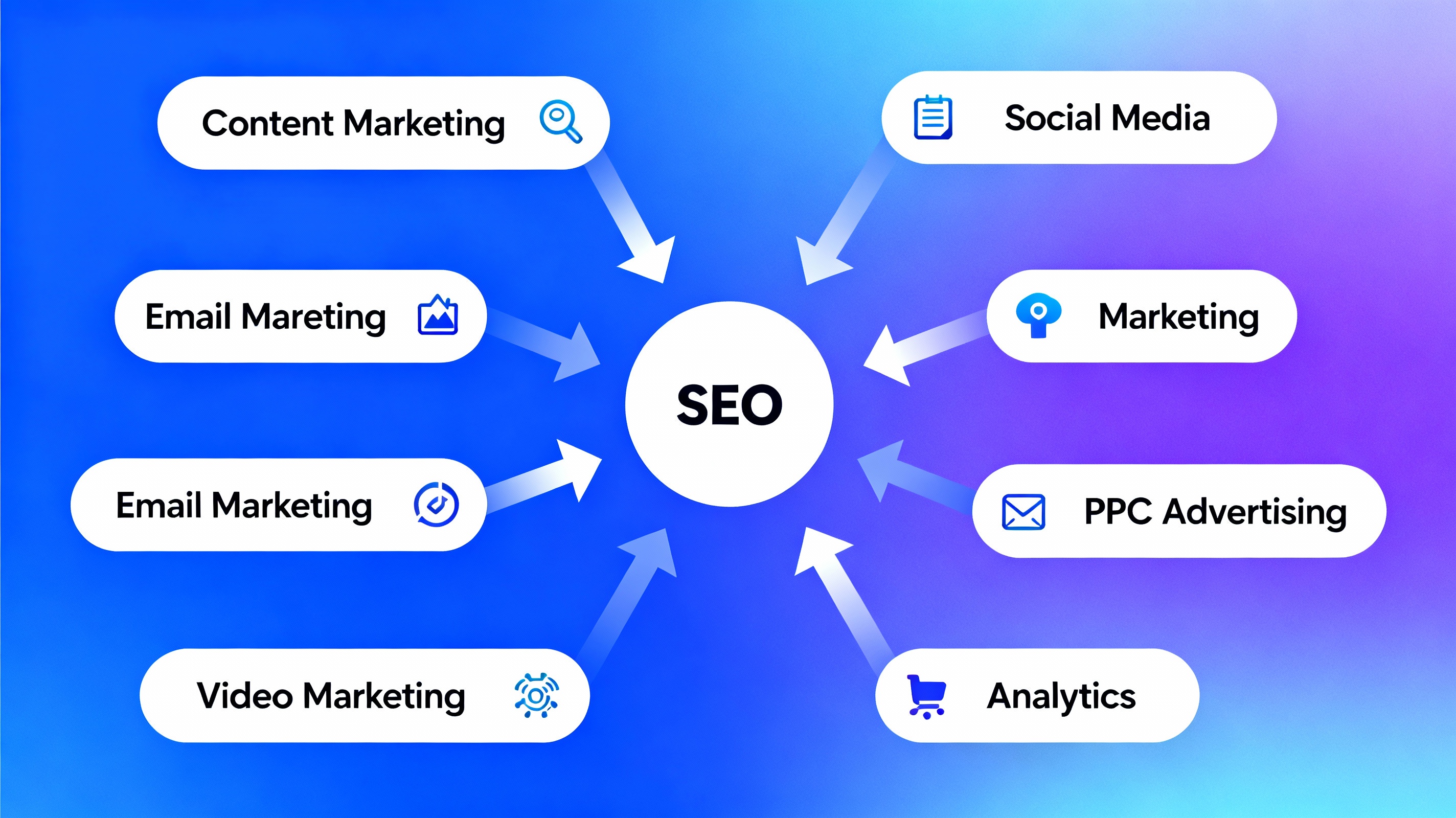
What Is a Digital Marketing Strategy?
A digital marketing strategy is a comprehensive plan that outlines how your business will achieve its marketing and sales objectives through online channels. It defines which digital platforms you'll use, what content you'll create, who you're targeting, and how you'll measure success.
Unlike traditional marketing, digital strategy enables precise audience targeting, real-time performance tracking, and the ability to adjust campaigns on the fly based on data. It encompasses all digital touchpoints where customers interact with your brand: search engines, social media platforms, email, websites, mobile apps, and digital advertising.
Core components of an effective digital marketing strategy include:
-
Business and Marketing Objectives – Clear, measurable goals tied to business outcomes
-
Target Audience Personas – Detailed profiles of ideal customers including demographics, behaviors, pain points, and preferences
-
Channel Selection – Identifying which digital platforms will reach your audience most effectively
-
Content Strategy – Planning what content you'll create, when you'll publish it, and how it supports your goals
-
Budget Allocation – Determining how to distribute resources across channels and campaigns
-
Performance Metrics – Establishing KPIs to measure success and identify areas for improvement
-
Competitive Analysis – Understanding your market position and identifying opportunities to differentiate
The strategy serves as your roadmap, ensuring all marketing activities work together toward common objectives rather than operating in silos.
Why Your Business Needs a Documented Digital Marketing Strategy
Companies with a documented digital marketing strategy are significantly more likely to achieve their objectives than those operating without one. Research from the Content Marketing Institute shows that 69% of successful B2B companies and 53% of successful B2C companies have a documented content marketing strategy.
Key benefits of a strategic approach:
Alignment Across Teams – A documented strategy ensures marketing, sales, product, and leadership teams work toward shared goals with consistent messaging.
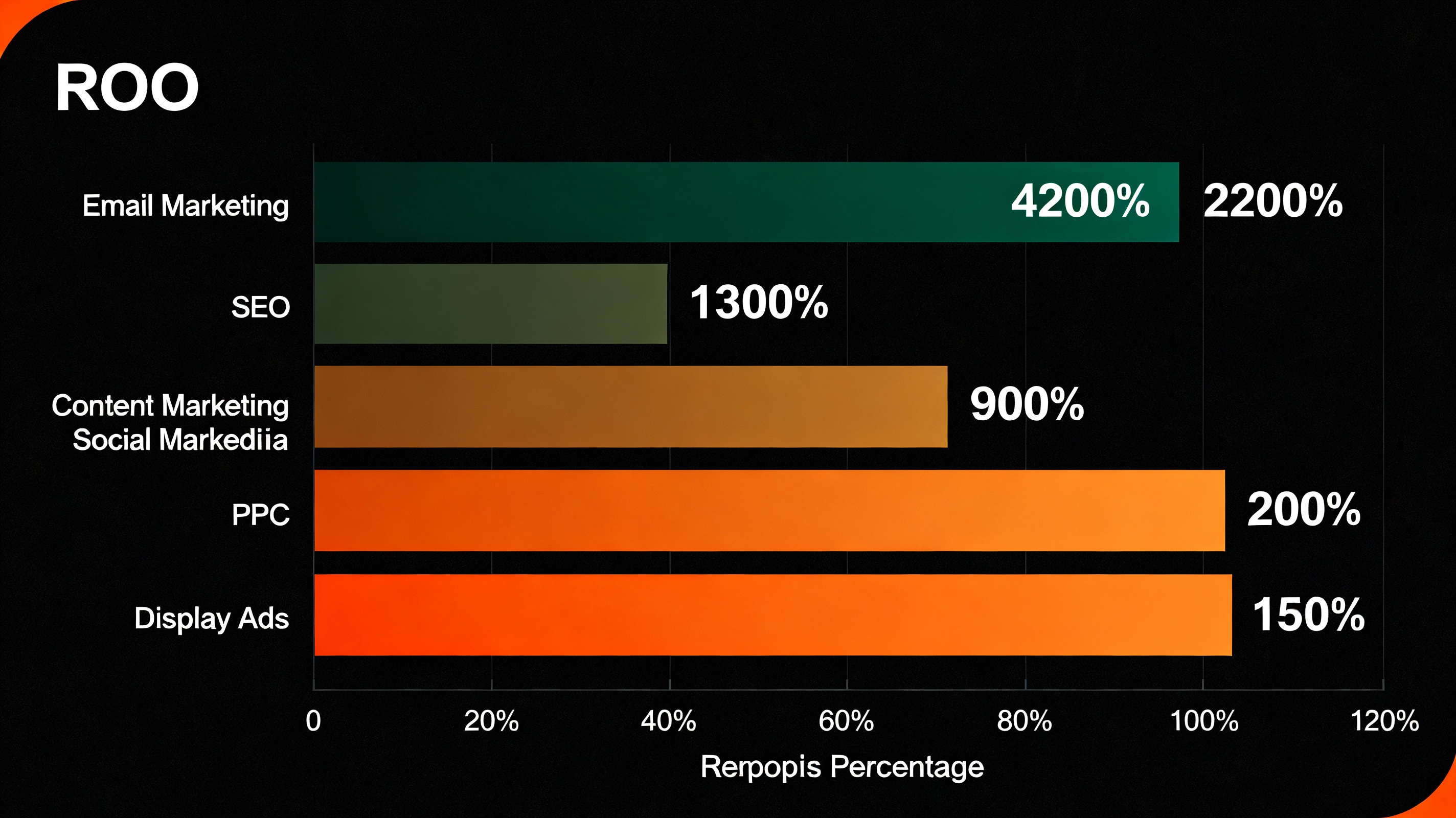
Efficient Resource Allocation – Rather than spreading your budget thin across every possible channel, a strategy helps you focus on the tactics that deliver the highest ROI for your specific business.
Measurable Results – Clear objectives and KPIs allow you to track what's working, what isn't, and where to adjust your approach.
Competitive Advantage – A strategic approach helps you identify market gaps and opportunities that competitors may be missing.
Long-Term Sustainability – Strategy prevents the "random acts of marketing" approach that wastes resources and produces inconsistent results.
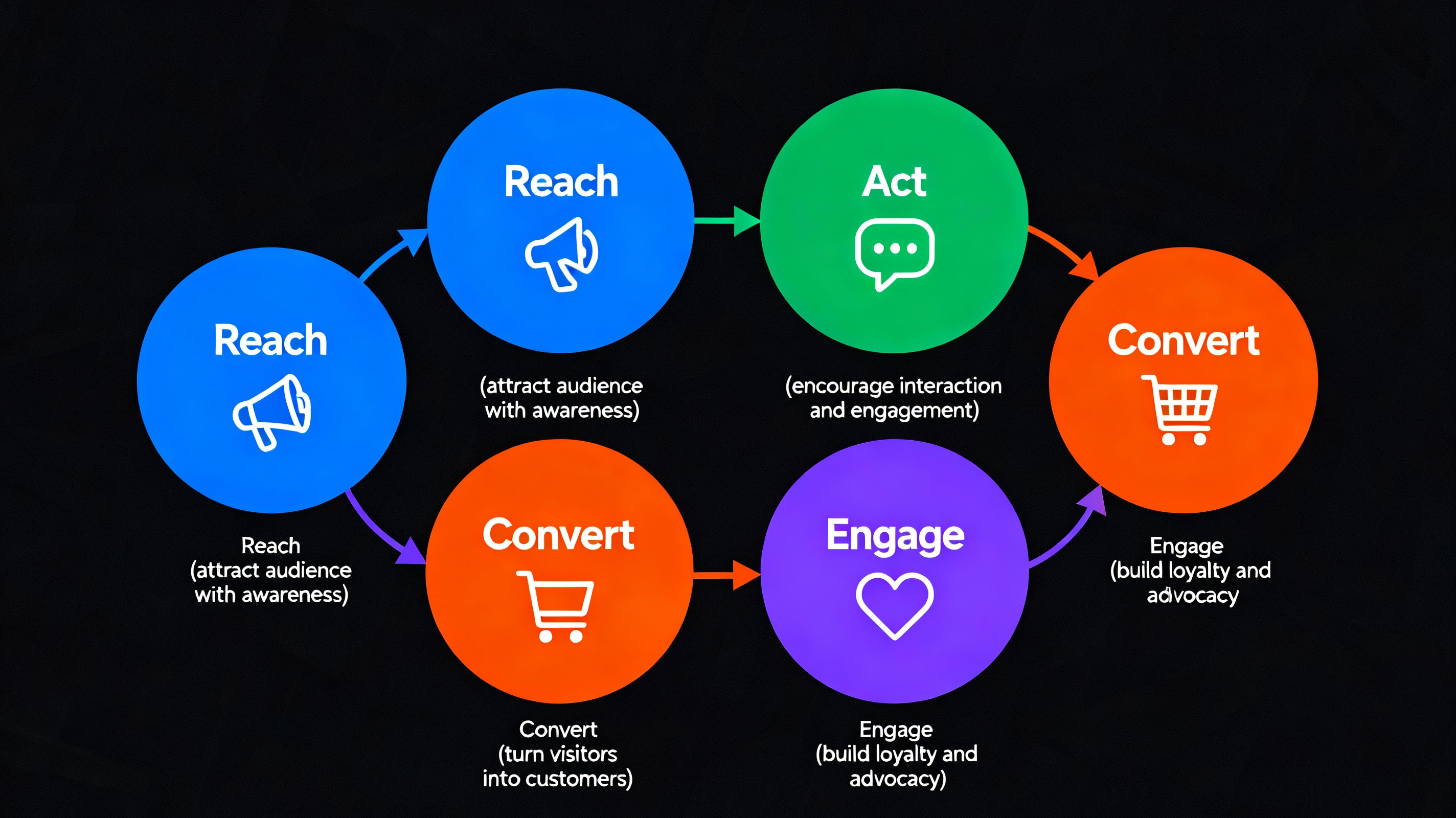
Understanding Digital Marketing Channels
Search Engine Optimization (SEO)
Optimizing your website to rank higher in organic search results for relevant keywords. SEO drives long-term, sustainable traffic and typically delivers one of the highest ROIs of any digital channel.
Content Marketing
Creating valuable, relevant content (blog posts, videos, podcasts, infographics) that attracts and engages your target audience while building authority and trust.
Social Media Marketing
Building brand presence and engaging audiences on platforms like LinkedIn, Instagram, Facebook, TikTok, Twitter/X, and YouTube. Each platform serves different demographics and content formats.
Email Marketing
Direct communication with subscribers through newsletters, promotional campaigns, and automated sequences. Email consistently delivers the highest ROI (averaging $42 for every $1 spent) of any digital channel.
Pay-Per-Click Advertising (PPC)
Paid ads on search engines (Google Ads, Bing Ads) and social platforms where you pay only when someone clicks your ad. Provides immediate traffic and precise targeting.
Video Marketing
Creating video content for platforms like YouTube, TikTok, Instagram Reels, and your website. Video drives exceptional engagement rates, with 90% of marketers reporting excellent ROI.
Influencer Marketing
Partnering with individuals who have established audiences to promote your products or services. Particularly effective on Instagram, TikTok, and YouTube.
Affiliate Marketing
Performance-based partnerships where you pay commissions to partners who drive sales or leads to your business.
Building Your Digital Marketing Strategy: Step-by-Step Framework
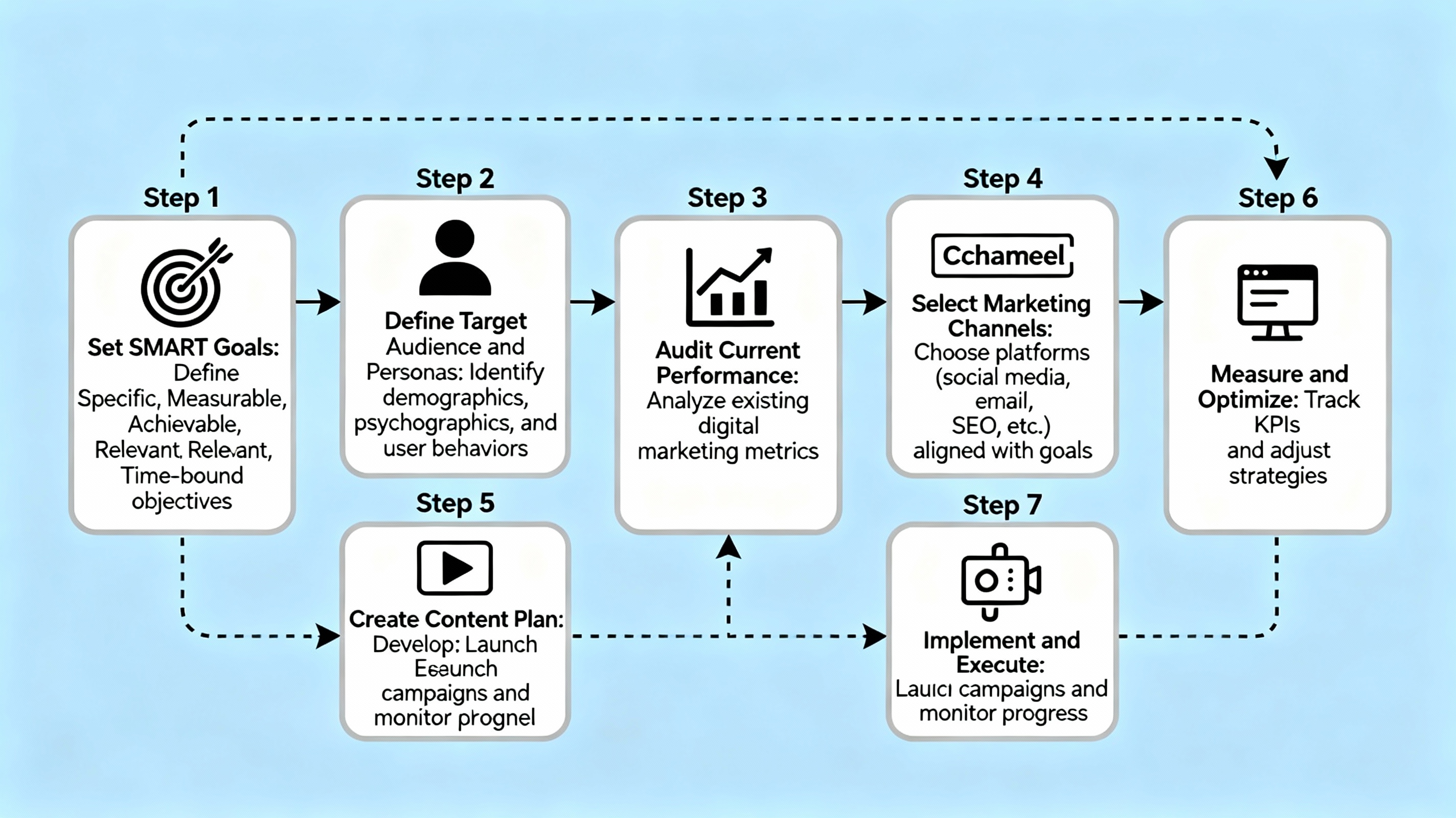
Step 1: Define Clear, Measurable Goals
Every effective strategy begins with specific objectives. Vague goals like "increase brand awareness" or "get more traffic" won't drive focused action or allow you to measure success.
Use the SMART framework to set goals:
-
Specific – Define exactly what you want to achieve
-
Measurable – Establish concrete metrics to track progress
-
Achievable – Set realistic targets based on resources and market conditions
-
Relevant – Align goals with broader business objectives
-
Time-bound – Set deadlines to create urgency and accountability
Common digital marketing goals include:
-
Lead Generation – Generate X qualified leads per month at Y cost per lead
-
Revenue Growth – Increase online revenue by X% within Y months
-
Brand Awareness – Reach X impressions and achieve Y% aided brand recall
-
Customer Acquisition – Acquire X new customers at Y customer acquisition cost
-
Engagement – Increase social engagement rate to X% and email open rate to Y%
-
Retention – Reduce churn rate to X% and increase customer lifetime value by Y%
Once you establish primary goals, prioritize them. Not all objectives can receive equal focus, especially with limited resources. Ranking goals helps you make strategic decisions about where to invest time and budget.
Step 2: Develop Detailed Buyer Personas
Understanding your target audience is foundational to effective digital marketing. Buyer personas are semi-fictional representations of your ideal customers based on real data and research.
Components of a comprehensive buyer persona:
Demographics
-
Age range
-
Gender
-
Income level
-
Education
-
Job title and industry
-
Geographic location
Psychographics
-
Values and beliefs
-
Interests and hobbies
-
Lifestyle preferences
-
Personality traits
Behavioral Patterns
-
Online behavior (platforms used, content consumed, browsing habits)
-
Purchase behavior (decision-making process, buying triggers, objections)
-
Preferred communication channels
-
Content format preferences (video, articles, podcasts, infographics)
Pain Points and Challenges
-
Primary problems they're trying to solve
-
Obstacles preventing them from achieving their goals
-
Frustrations with current solutions
Goals and Aspirations
-
Professional objectives
-
Personal goals
-
Success metrics
Creating 3-5 detailed personas allows you to tailor content, messaging, and channel selection to resonate with each segment of your audience. The more specific your personas, the more effectively you can personalize your marketing.
Step 3: Audit Your Current Digital Presence
Before building your strategy, assess where you currently stand. A comprehensive audit reveals strengths to leverage, weaknesses to address, and opportunities to pursue.
Website Audit
-
Traffic volume and sources
-
Top-performing pages
-
Conversion rates by page and traffic source
-
Technical SEO issues (site speed, mobile-friendliness, broken links)
-
User experience and navigation
Content Audit
-
Inventory all existing content
-
Analyze performance metrics (traffic, engagement, conversions)
-
Identify content gaps based on buyer persona needs
-
Assess content quality and relevance
-
Determine what to update, repurpose, or retire
Social Media Audit
-
Follower growth trends across platforms
-
Engagement rates and patterns
-
Top-performing content
-
Audience demographics
-
Competitor performance benchmarks
SEO Audit
-
Current keyword rankings
-
Organic traffic trends
-
Backlink profile quality and quantity
-
Technical SEO health
-
On-page optimization opportunities
Competitive Analysis
-
Competitors' channel presence
-
Their content strategies and messaging
-
Estimated traffic and engagement levels
-
Gaps in their strategies you can exploit
-
Their unique value propositions
This audit creates your baseline and informs strategic decisions about where to focus improvement efforts.
Step 4: Select Your Marketing Channels Strategically
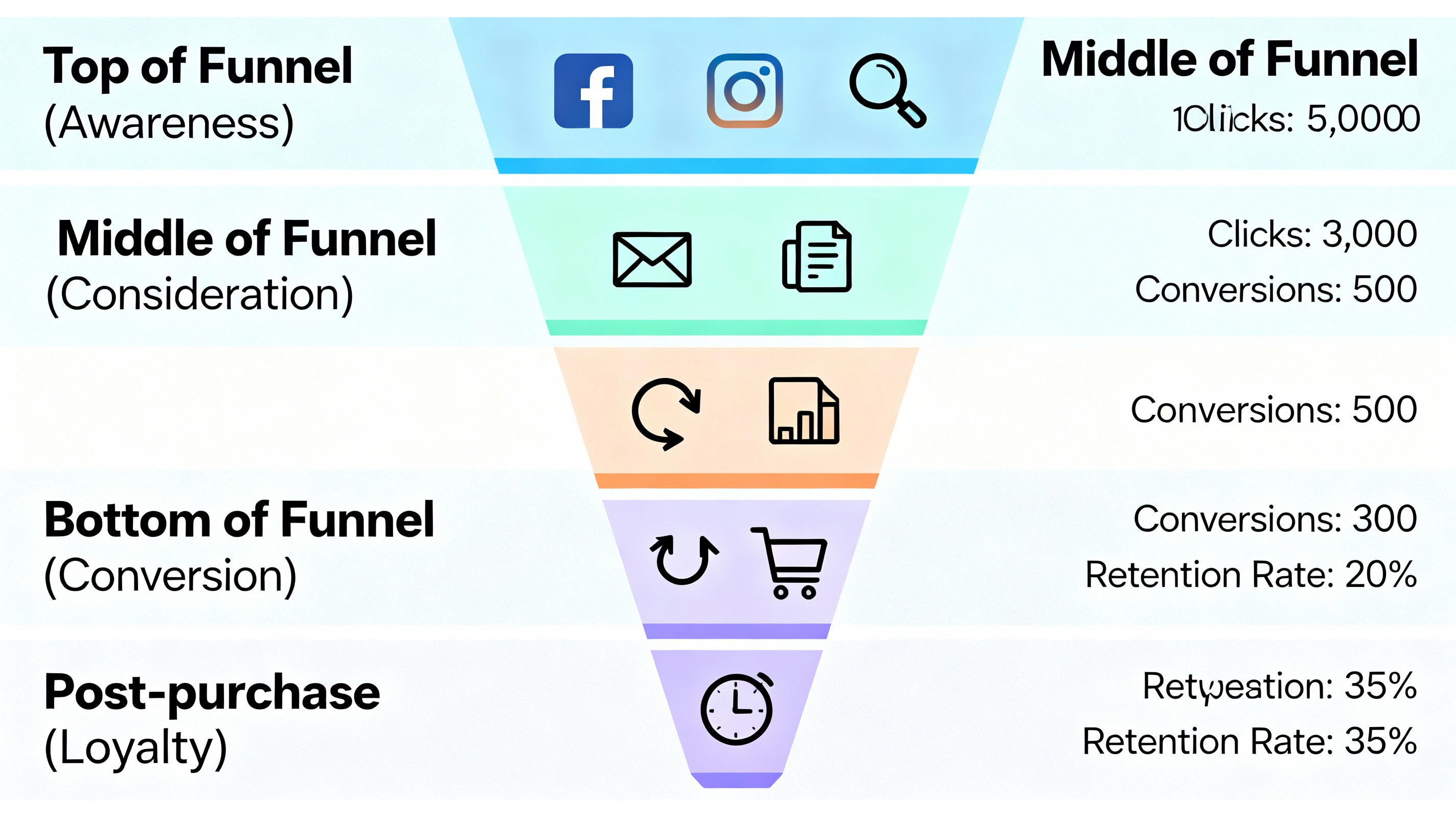
Not every digital channel will be right for your business. Channel selection should be based on where your target audience spends time, what your goals are, and where you can realistically compete.
Channel Selection Framework:
Match Channels to Audience Behavior
If your personas are active on LinkedIn and consume business podcasts, prioritize those channels over TikTok. Use your persona research to identify where your audience actually is.
Align Channels with Goals
-
Brand awareness → Social media, display advertising, video marketing
-
Lead generation → SEO, content marketing, PPC, LinkedIn
-
Direct sales → Email marketing, retargeting, shopping ads
-
Customer retention → Email automation, social community, content marketing
Consider Your Resources
Video marketing delivers excellent ROI but requires production capabilities. SEO takes months to show results, but provides compounding returns. Choose channels where you can commit consistently.
Start Focused, Then Expand
Rather than spreading resources thin across ten channels, master 2-3 core channels first. Once those are performing well, expand strategically to additional platforms.
Step 5: Create a Comprehensive Content Strategy
Content is the fuel that powers digital marketing. A strategic content approach ensures you're creating valuable assets that attract, engage, and convert your audience.
Content Strategy Framework:
Content Types and Formats
Different formats serve different purposes:
-
Blog posts – Drive organic traffic, establish authority, support SEO
-
Videos – Increase engagement, explain complex topics, showcase products
-
Infographics – Simplify data, encourage social sharing
-
Case studies – Provide social proof, support sales conversations
-
Ebooks and whitepapers – Generate leads, demonstrate expertise
-
Podcasts – Build community, reach audiences during commutes
-
Webinars – Generate leads, educate audiences, position as thought leader
Content Pillars and Topic Clusters
Organize content around core themes (pillars) relevant to your business, then create supporting content (clusters) that dive deeper into specific subtopics. This approach establishes topical authority and improves SEO.
Example for a marketing software company:
-
Pillar: Email Marketing Strategy
-
Clusters: Email Segmentation Guide, Email Automation Best Practices, Email Design Tips, Email Metrics to Track
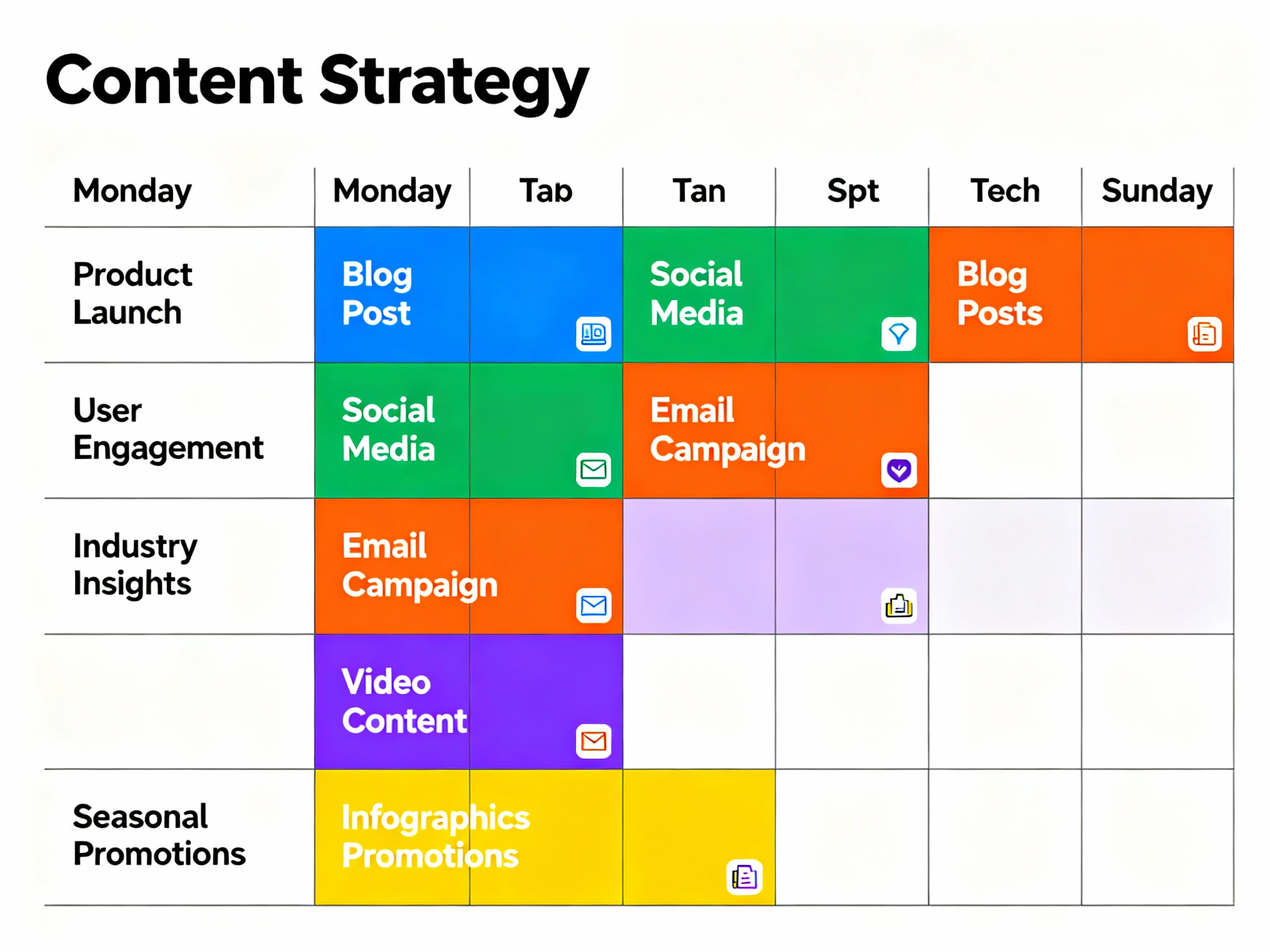
Editorial Calendar
Plan content production and distribution schedules. A well-maintained calendar ensures consistency, prevents last-minute scrambles, and allows for strategic timing around industry events, product launches, and seasonal trends.
Content Distribution Strategy
Creating great content is only half the battle—you must also distribute it effectively:
-
Owned channels – Your website, blog, email list, social profiles
-
Earned channels – PR coverage, guest posts, social shares, backlinks
-
Paid channels – Promoted posts, display ads, sponsored content
Plan how each piece of content will be promoted across multiple channels to maximize reach and engagement.
Step 6: Implement Marketing Technology and Tools
The right tools streamline execution, provide valuable data, and enable personalization at scale.
Essential Marketing Technology Categories:
Analytics Platforms
-
Google Analytics for website behavior tracking
-
Social media native analytics for platform-specific insights
-
Marketing attribution tools to understand customer journey
Content Management Systems (CMS)
-
WordPress, HubSpot, or Webflow for website management
-
Digital asset management for organizing visual content
Email Marketing Platforms
-
Mailchimp, Constant Contact, or ActiveCampaign for email campaigns
-
Marketing automation for personalized sequences
SEO Tools
-
Semrush, Ahrefs, or Moz for keyword research and rank tracking
-
Screaming Frog or Sitebulb for technical SEO audits
Social Media Management
-
Hootsuite, Buffer, or Sprout Social for scheduling and monitoring
-
Canva for visual content creation
Customer Relationship Management (CRM)
-
Salesforce, HubSpot CRM, or Pipedrive for lead tracking and nurturing
Project Management
-
Asana, Monday.com, or Trello for coordinating marketing activities
Choose tools that integrate with each other to create a cohesive technology stack that shares data and automates workflows.
Step 7: Measure, Analyze, and Optimize
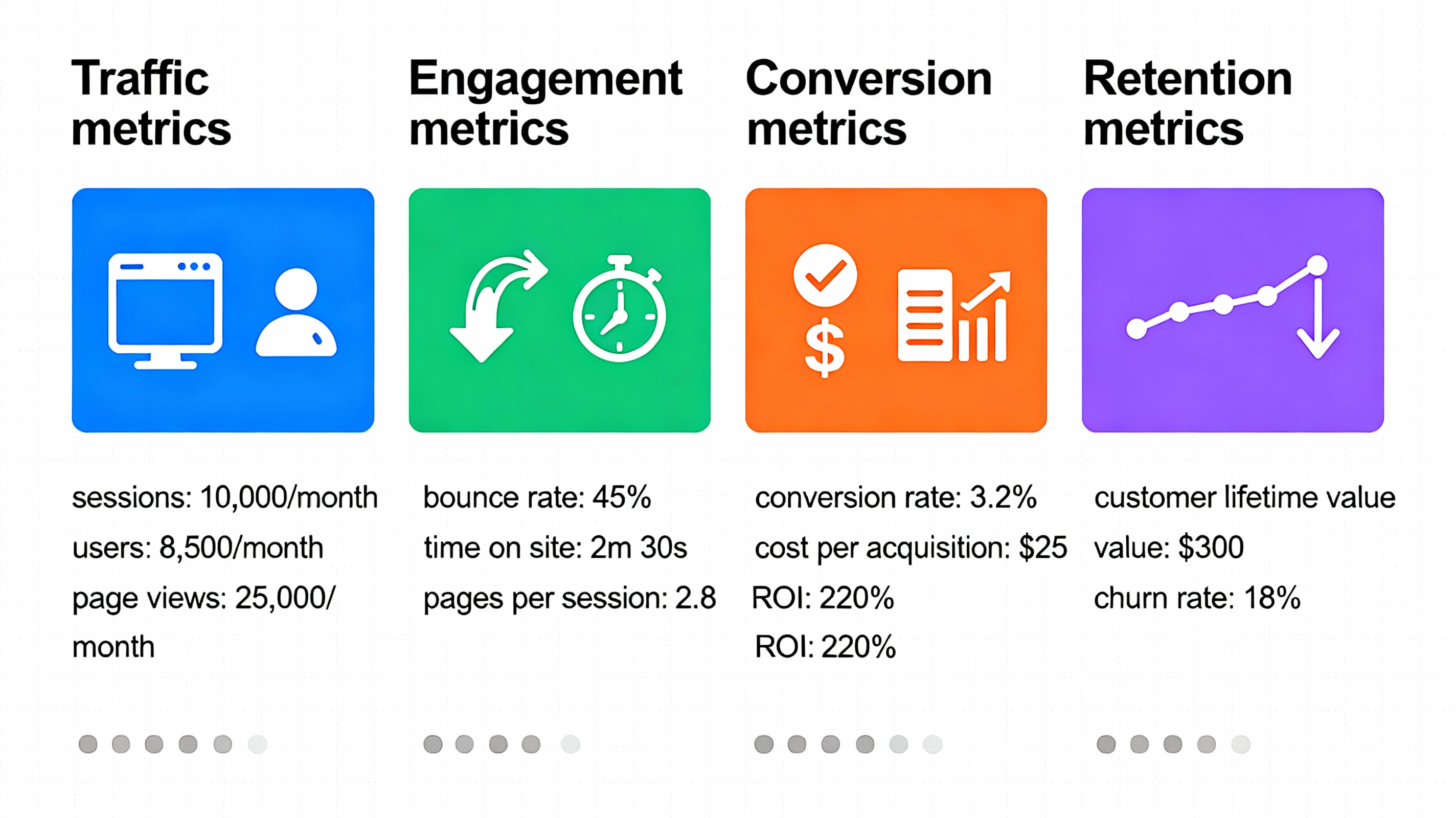
Key Performance Indicators by Goal:
Brand Awareness Metrics
-
Impressions and reach
-
Website traffic
-
Social media followers and engagement
-
Share of voice
-
Brand search volume
Engagement Metrics
-
Time on page/site
-
Pages per session
-
Bounce rate
-
Social engagement rate (likes, comments, shares)
-
Email open and click-through rates
-
Video view duration
Conversion Metrics
-
Conversion rate by channel
-
Cost per acquisition (CPA)
-
Cost per lead (CPL)
-
Return on ad spend (ROAS)
-
Lead-to-customer conversion rate
Retention and Loyalty Metrics
-
Customer lifetime value (CLV)
-
Customer retention rate
-
Churn rate
-
Net Promoter Score (NPS)
-
Repeat purchase rate
Regular Optimization Cycles
Establish a rhythm for reviewing performance:
-
Weekly – Monitor campaign performance, adjust budgets for paid channels
-
Monthly – Analyze channel performance, content metrics, progress toward goals
-
Quarterly – Comprehensive strategy review, competitive analysis, major adjustments
-
Annually – Full strategy refresh based on market changes and business evolution
Use A/B testing to continuously improve individual elements: email subject lines, landing page copy, ad creative, CTA placement, and content formats.
Digital Marketing Trends Shaping 2025 Strategy
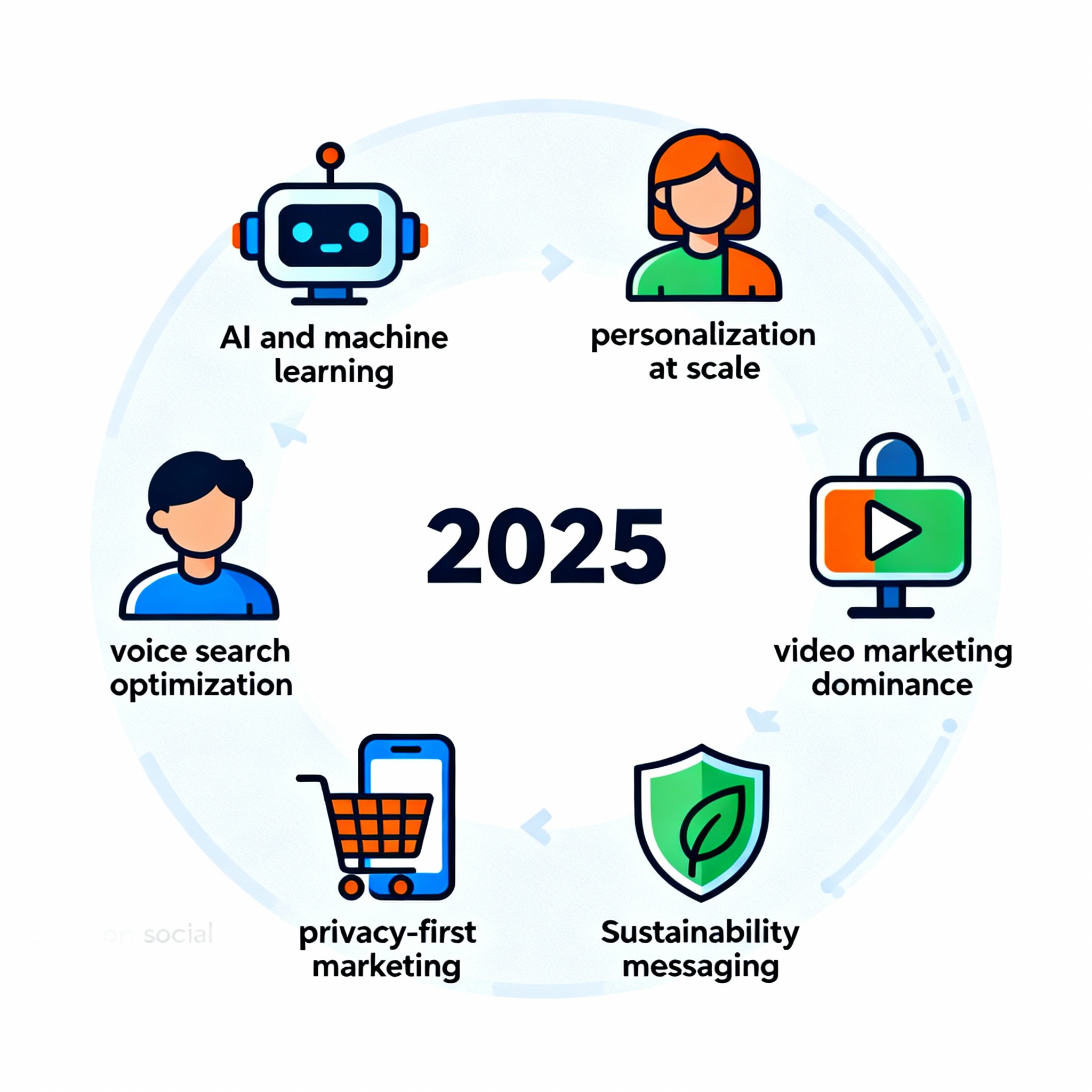
AI and Machine Learning Integration
Artificial intelligence is transforming digital marketing from creative execution to predictive analytics and automation. AI tools now assist with content creation, ad optimization, customer service chatbots, and personalization at scale.
Strategic applications:
-
Predictive analytics forecasting customer behavior and churn risk
-
AI-powered content generation for ad copy and email subject lines
-
Chatbots handling customer inquiries 24/7
-
Automated bid optimization for PPC campaigns
-
Dynamic content personalization based on user behavior
Action step: Start with one AI tool in your existing workflow—perhaps an AI writing assistant for content ideation or a chatbot for customer service—and expand from there.
Hyper-Personalization at Scale
Generic, one-size-fits-all marketing no longer cuts through the noise. Consumers expect personalized experiences tailored to their preferences, behaviors, and stage in the customer journey.
Modern marketing platforms enable personalization across multiple dimensions:
-
Content – Showing different website content based on visitor behavior and demographics
-
Email – Dynamic email content that changes based on recipient data
-
Ads – Retargeting with products users viewed or added to cart
-
Recommendations – AI-driven product and content suggestions
Implementation tip: Start with email segmentation based on purchase history or engagement level, then expand to website personalization and dynamic ad creative.
Privacy-First Marketing
With the deprecation of third-party cookies, GDPR, CCPA, and other privacy regulations, marketers must adapt to a privacy-first world while still delivering personalized experiences.
Strategic responses:
-
Build first-party data assets through email lists and customer accounts
-
Implement transparent data collection practices with clear value exchange
-
Adopt server-side tracking and conversion APIs
-
Focus on contextual targeting alongside behavioral targeting
-
Use privacy-compliant measurement solutions
Short-Form Video Dominance
Short-form video on TikTok, Instagram Reels, and YouTube Shorts continues to dominate social media engagement. This format works exceptionally well for product demonstrations, educational content, and building authentic brand personality.
Content strategies:
-
Repurpose longer content into short clips
-
Behind-the-scenes glimpses of company culture
-
Quick tips and how-tos
-
User-generated content campaigns
-
Trend participation and challenges
Social Commerce Integration
The line between social media and e-commerce continues to blur. Platforms like Instagram, Facebook, TikTok, and Pinterest now offer native shopping features that allow users to purchase without leaving the app.
Optimization tactics:
-
Set up Instagram Shop and Facebook Shops
-
Use shoppable posts and product tags
-
Leverage TikTok Shopping for product discovery
-
Create video content showcasing products in use
-
Partner with creators for authentic product demonstrations
Common Digital Marketing Strategy Mistakes to Avoid
Lack of Clear Goals
Without specific, measurable objectives, you can't determine if your strategy is working or make data-driven decisions about where to optimize.
Ignoring Mobile Experience
Over 60% of web traffic comes from mobile devices. If your website, emails, and ads aren't optimized for mobile, you're losing conversions.
Focusing on Vanity Metrics
Follower counts and page views don't matter if they don't lead to business outcomes. Focus on metrics tied to revenue, leads, and customer acquisition.
Inconsistent Brand Voice
When different channels use different messaging, tone, and positioning, you confuse your audience and dilute brand recognition.
Neglecting Existing Customers
Acquiring new customers costs 5-25 times more than retaining existing ones. Build strategies for customer retention, not just acquisition.
Not Testing and Optimizing
Launching campaigns and leaving them unchanged means missing opportunities to improve performance. Implement continuous testing cultures.
Chasing Every New Platform
Just because a new social platform is trending doesn't mean your audience is there. Stay focused on channels where your personas actually engage.
Quick Takeaways
-
A documented digital marketing strategy aligns teams, focuses resources, and drives measurable results more effectively than scattered tactical efforts.
-
Start with clear SMART goals tied to business outcomes like revenue, leads, customer acquisition, retention, or brand awareness.
-
Develop detailed buyer personas based on real customer data to guide content creation, channel selection, and messaging decisions.
-
Audit your current performance across all digital channels to establish baselines and identify opportunities for improvement.
-
Select channels strategically based on where your audience is, what your goals are, and where you can commit resources consistently.
-
Content strategy is essential – plan what you'll create, who it's for, what formats work best, and how you'll distribute across channels.
-
Measure what matters – track KPIs directly tied to business goals, not vanity metrics like follower counts.
-
Embrace 2025 trends including AI automation, hyper-personalization, privacy-first practices, short-form video, and social commerce.
-
Avoid common mistakes like unclear goals, ignoring mobile, inconsistent branding, neglecting existing customers, and failing to optimize.
-
Optimize continuously through regular performance reviews, A/B testing, and data-driven adjustments to campaigns and content.
Conclusion
Building a comprehensive digital marketing strategy is no longer optional—it's essential for businesses that want to compete effectively in 2025's crowded digital landscape. The companies that succeed online aren't those with the biggest budgets; they're the ones with the clearest strategies, the deepest understanding of their customers, and the discipline to execute consistently while continuously optimizing based on data.
Your strategy doesn't need to be perfect from day one. Start by documenting your goals, defining your target audience, and selecting 2-3 core channels where you can commit to consistent, quality execution. Build measurement into everything you do from the beginning so you can track what's working and adjust what isn't. As you gain traction and see results, expand strategically to additional channels and more sophisticated tactics.
The digital marketing landscape will continue evolving—new platforms will emerge, algorithms will change, and consumer behaviors will shift. But the fundamentals remain constant: understand your audience deeply, provide genuine value, deliver consistent experiences across touchpoints, and let data guide your decisions. Companies that master these principles while remaining agile enough to adapt to change will thrive regardless of what specific tactics or platforms dominate at any given moment.
Start building your digital marketing strategy today by setting one SMART goal for the next quarter, creating your first buyer persona, and auditing performance on your top two channels. The strategic approach you implement now will compound into significant competitive advantages over the coming months and years.
Frequently Asked Questions About Digital Marketing Strategy
Q1: How much should I budget for digital marketing?
A: Most businesses allocate 7-12% of total revenue to marketing, with 45-75% of that going to digital channels. For startups and growth-stage companies, the percentage is often higher (15-20%). The right budget depends on your industry, competition, growth goals, and customer acquisition costs. Start by calculating your target cost per acquisition and work backward based on how many customers you need to acquire.
Q2: Which digital marketing channel should I prioritize?
A: This depends entirely on your business model, target audience, and goals. B2B companies often see the best results from LinkedIn, content marketing, and email. E-commerce businesses typically prioritize Google Shopping, Instagram, and email. Service businesses often focus on SEO, Google Ads, and reputation management. Start where your customers are already spending time and where you can provide consistent, quality execution.
Q3: How long does it take to see results from digital marketing?
A: Timeline varies dramatically by channel. Paid advertising can drive results within days. SEO typically takes 3-6 months to show meaningful traction. Email marketing can generate immediate results if you have an existing list. Content marketing builds momentum over 6-12 months. Social media organic reach develops over several months of consistent posting. Set realistic expectations and balance quick-win tactics with long-term strategies.
Q4: Do I need to be on every social media platform?
A: Absolutely not. It's better to excel on 2-3 platforms where your audience actively engages than to spread resources thin across every platform with mediocre presence. Focus on platforms that align with your audience demographics, content strengths, and business goals. A B2B software company might focus on LinkedIn and YouTube while an e-commerce fashion brand prioritizes Instagram and TikTok.
Q5: How do I measure digital marketing ROI?
A: Calculate ROI by comparing revenue generated from digital marketing to total investment (ad spend, tools, salaries, agencies). The formula: (Revenue - Investment) / Investment × 100. For lead-generation businesses, track cost per lead, lead-to-customer conversion rate, and customer lifetime value. Use attribution modeling to understand which channels and touchpoints contribute to conversions. Most businesses use multi-touch attribution rather than last-click to get a complete picture.
Q6: Should I hire an agency or build an in-house team?
A: Each approach has merits. Agencies bring specialized expertise, established processes, and access to advanced tools without long-term employment commitments. In-house teams develop deep product knowledge and align closely with company culture. Many successful companies use a hybrid model: in-house strategists and content creators supported by agencies for specialized services like paid media, SEO, or video production. Start by assessing your budget, the complexity of your needs, and your ability to attract and retain marketing talent.
Share Your Digital Marketing Success
What digital marketing strategies are working best for your business? We'd love to hear which channels drive the most ROI and what challenges you're facing. Share your experience in the comments to help other marketers navigate their strategy development.
If this guide helped you build a clearer digital marketing strategy, share it with your team, colleagues, and business partners who might benefit. And follow us for regular updates on digital marketing trends, tactics, and strategy frameworks as the landscape continues to evolve.
Smart Insights. (2025). Digital marketing strategy: How to structure a plan for 2025? Retrieved from https://www.smartinsights.com/digital-marketing-strategy/
Park University. (2025). 10 Effective Marketing Strategies for 2025. Retrieved from https://www.park.edu/blog/effective-marketing-strategies/
DesignRush. (2025). 7 Best Digital Marketing Channels: ROI Comparison (2025). Retrieved from https://www.designrush.com/agency/digital-marketing/trends/digital-marketing-channels-roi-comparison
Bynder. (2025). 6 steps to create a content framework that elevates your content. Retrieved from https://www.bynder.com/en/blog/content-framework/
Forbes Business Council. (2024). Digital Marketing Trends For 2025 And Beyond. Retrieved from https://www.forbes.com/councils/forbesbusinesscouncil/2024/11/13/digital-marketing-trends-for-2025-and-beyond/
WSI World. (2025). The Future of Marketing Strategy: 5 Predictions for 2025. Retrieved from https://www.wsiworld.com/blog/the-future-of-marketing-strategy-5-predictions-for-2025
HubSpot. (2025). How to Develop a Content Strategy in 7 Steps. Retrieved from https://blog.hubspot.com/marketing/content-marketing-plan
Landingi. (2025). 7 Key Digital Marketing Channels: Definition & How to Use. Retrieved from https://landingi.com/digital-marketing/channels/