 By
·
11 minute read
By
·
11 minute read
Introduction: Why Most Keyword Research Fails (and How to Fix It)
Most keyword research focuses on the wrong goal: more traffic instead of better traffic. Chasing high‑volume keywords can certainly inflate your analytics dashboard, but if those visitors never become leads, customers, or email subscribers, the effort is wasted. High traffic with low conversions is often a sign that the keywords targeted do not match the actions you want people to take.
"Keyword research that actually converts" means shifting the focus from what you want to write about to what buyers want to accomplish. It means understanding their problems, the language they use when they are researching solutions, and the exact phrases they type in just before they buy. When your keyword strategy aligns with that buying journey, the content you create becomes a natural bridge between search intent and your offers.
This article will show a complete process for finding and prioritizing keywords that lead to revenue—not just rankings. It will also be structured so you can later interlink it with our other four SEO articles: "On‑Page SEO Checklist for Modern Websites," "Technical SEO Basics for Non‑Developers," "SEO Mistakes That Kill Organic Growth," and "Measuring SEO Success Beyond Rankings." Together, these five guides create a comprehensive SEO framework where each article reinforces the others.
What "Conversion-Focused" Keyword Research Really Means
Conversion‑focused keyword research sits at the intersection of three things:
-
The problems your ideal customers are actively trying to solve
-
The offers and solutions you actually provide
-
The language people naturally use at each stage of their decision process
Traditional keyword research often stops at metrics like search volume and keyword difficulty. Those numbers are useful, but they say nothing about whether searchers are ready to act or whether your business is a good match for their intent. A keyword like "SEO" or "keyword research" might have impressive volume, but it's too broad to tell you what the user really wants—or whether you're the right answer.
Conversion‑focused research, in contrast, starts from your offers and works outward. You first define what you want people to do (buy a service, book a call, start a free trial, download a lead magnet), then hunt for search terms that logically lead into those actions. This turns keyword research into a revenue‑driven activity rather than a vanity‑metric exercise.
The Role of Search Intent in Conversions
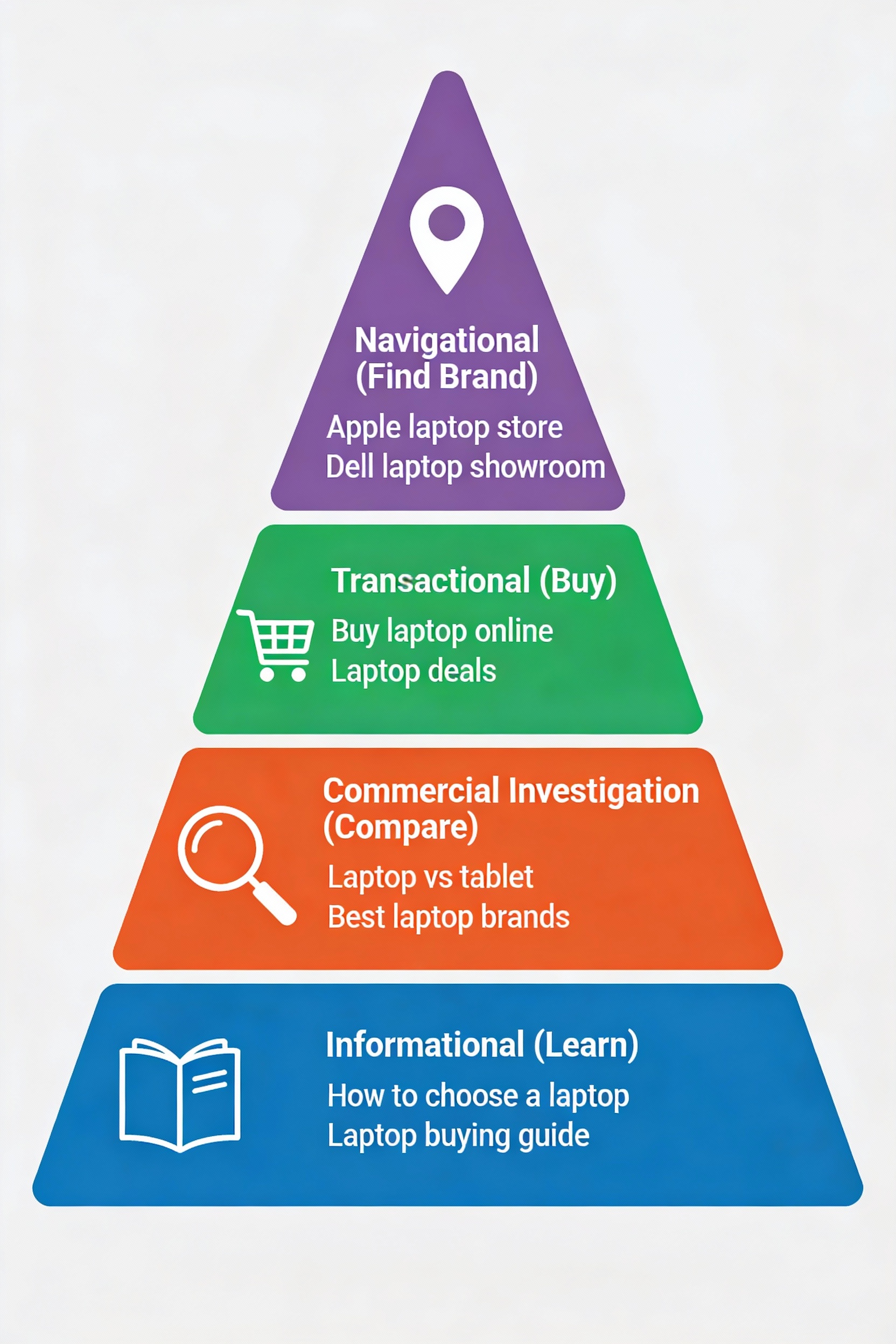
1. Informational Intent – The user wants to learn something.
Examples: "how to do keyword research", "what is long‑tail SEO"
Best for: top‑of‑funnel education, brand awareness, email capture
2. Commercial Investigation – The user is comparing options.
Examples: "best keyword research tools", "Ahrefs vs Semrush for agencies"
Best for: persuading, pre‑selling, and steering users toward your solution
3. Transactional Intent – The user is ready to act.
Examples: "keyword research service pricing", "buy SEO keyword audit"
Best for: direct conversions: calls, purchases, or demo bookings
4. Navigational Intent – The user wants a specific site or brand.
Examples: "Google Keyword Planner login", "[your brand] pricing"
Best for: ensuring branded and key navigational terms rank properly
Conversion‑focused keyword research prioritizes commercial and transactional intent, but uses informational keywords strategically to fill your funnel, build authority, and support pages that sell.
Starting From Your Offers (Not the Tool)
Most people open a keyword tool first, then try to reverse‑engineer a strategy from whatever the tool shows. A better approach is to start from your offers and customer types. This ensures that your keyword research leads to actionable, revenue‑focused insights rather than a generic list of "popular" search terms.
Step 1: List Your Core Offers
Write down what you actually sell or want people to do:
-
SEO audits
-
Ongoing SEO retainers
-
SEO courses or memberships
-
DIY templates and checklists
-
SaaS tools (e.g., rank tracker, keyword research software)
For each offer, note the primary action you want users to take: schedule a call, request a quote, start a trial, purchase, or join a list.
Step 2: Identify Your Ideal Customers
Clarify who the offer is for. For example:
-
Local service businesses
-
E‑commerce brands
-
B2B SaaS companies
-
Bloggers and content creators
Each group uses different language. "Local SEO for restaurants" and "enterprise SEO platform" live in very different universes, even though they share the letters "SEO."
Step 3: Brainstorm Real Phrases
Now combine offers + customer types + situations. Examples for an SEO agency:
-
"SEO keyword research service for ecommerce brands"
-
"local SEO keyword research for dentists"
-
"SEO audit and keyword strategy package"
You can refine these later with tools, but this exercise keeps your research grounded in revenue‑relevant topics.
Finding High-Intent Keywords in the Wild
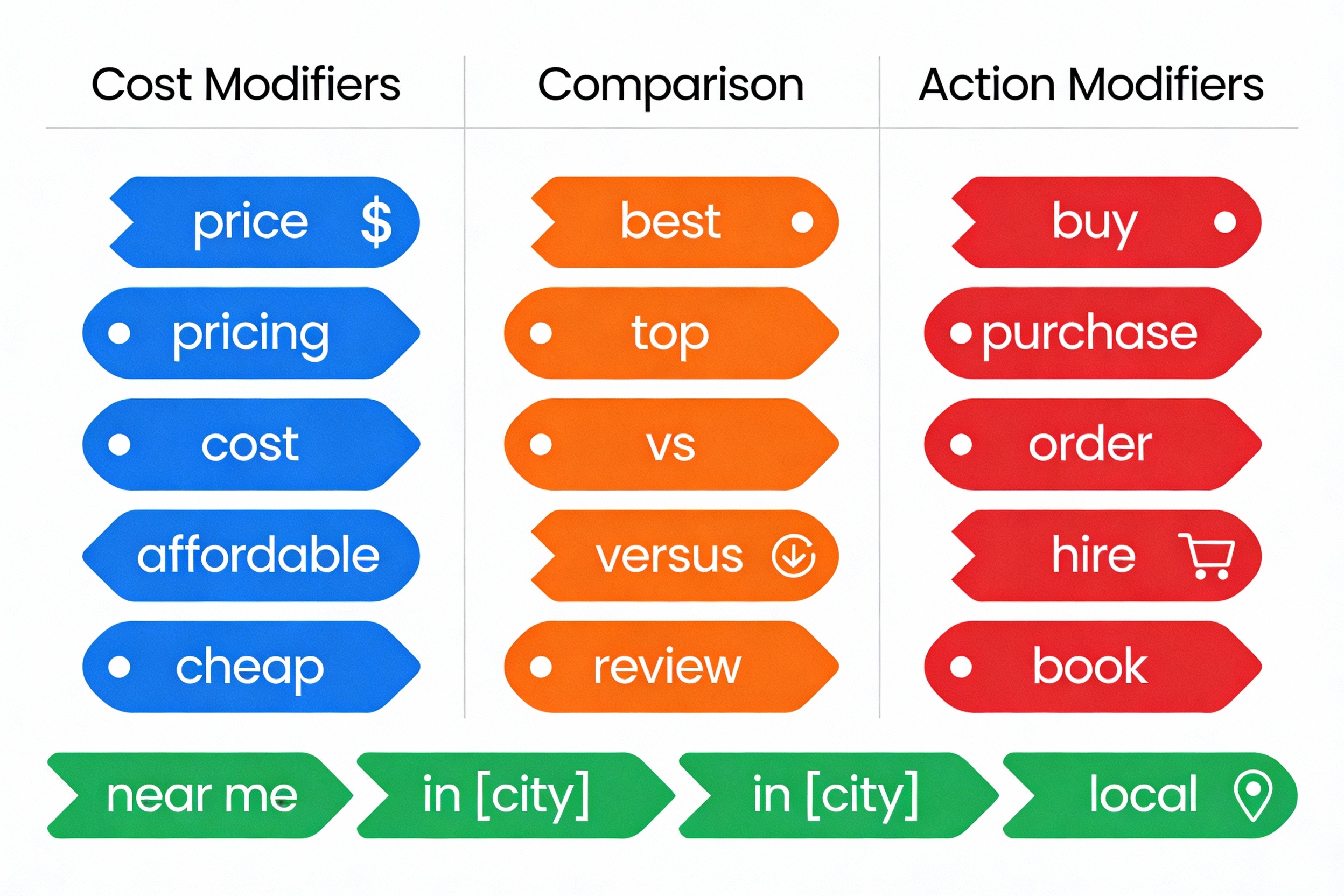
Look for "Money Modifiers"
Certain words usually signal higher buying intent:
Cost Modifiers: price, pricing, cost, affordable, cheap, budget, quote
Comparison Modifiers: best, top, vs, versus, review, alternative
Action Modifiers: buy, purchase, order, hire, book, subscribe, download
Location Modifiers: near me, in [city], local
-
"keyword research" – broad, mixed intent
-
"keyword research tips for beginners" – informational
-
"best keyword research tools for Amazon sellers" – commercial investigation
-
"keyword research service pricing" – transactional
All four contain "keyword research," yet only the last two are likely to produce leads or sales in the short term. That doesn't mean you ignore the first two—it means you understand where they sit in your funnel and how aggressively to prioritize them.
Reading Intent Directly From the SERP
Before you commit to a keyword, type it into a search engine and study the first page:
-
Are most results how‑to guides and blog posts? → mainly informational.
-
Are there many "best X" posts, comparison reviews, and listicles? → commercial.
-
Do you see product pages, pricing pages, and "request a quote" pages? → transactional.
This "SERP reading" step is one of the biggest upgrades you can make to your keyword research. It keeps you from trying to force a transactional page into an informational SERP (or vice versa), which is a common reason pages get impressions but no clicks—or clicks but no conversions.
Grouping Keywords by Funnel Stage
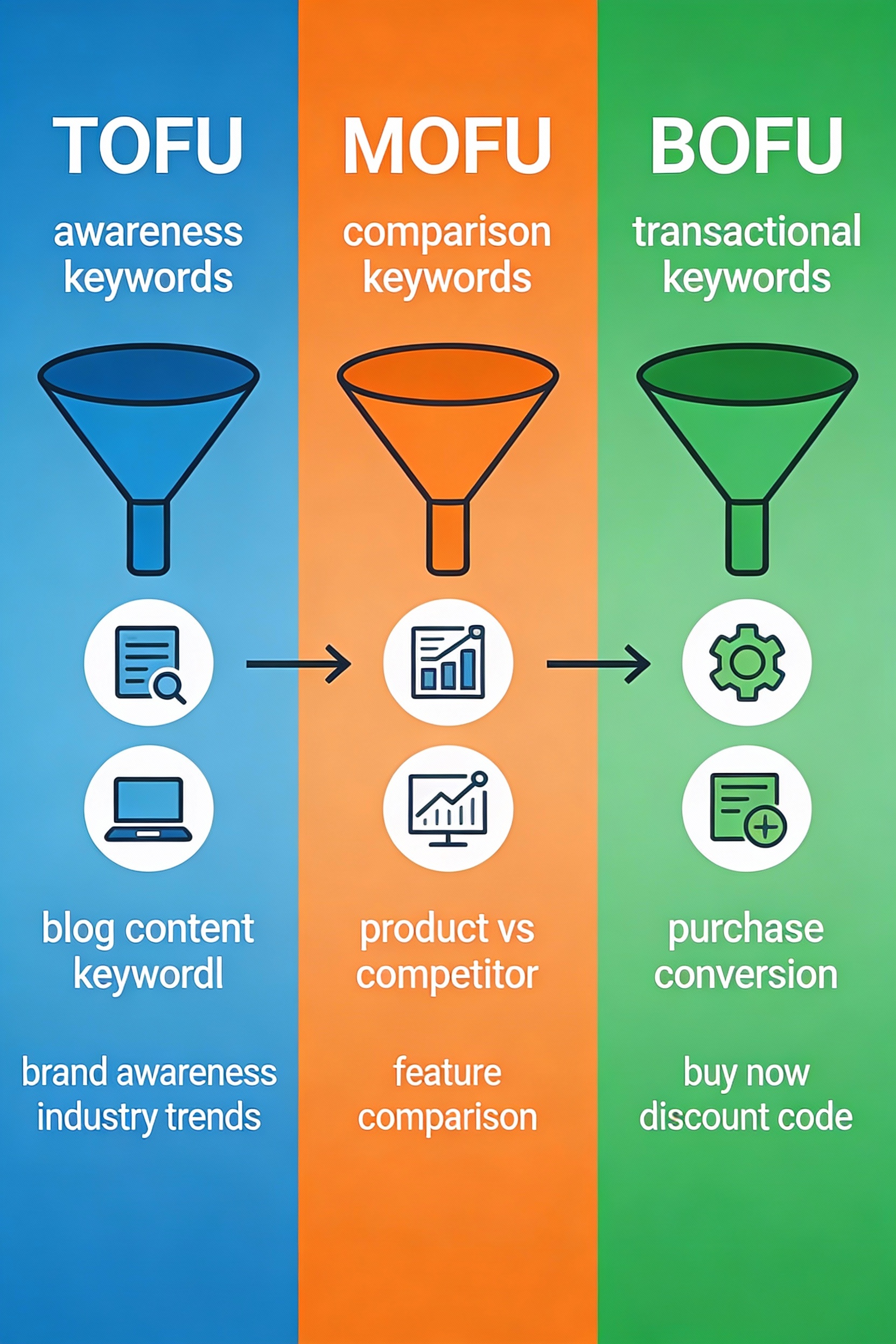
Top of Funnel (TOFU): Education and Discovery
These keywords bring in people who are problem‑aware but may not yet be solution‑aware.
Examples:
-
"how to do keyword research for a blog"
-
"keyword research process step by step"
-
"what is a long‑tail keyword"
Content types:
-
Ultimate guides
-
Beginner tutorials
-
Checklists and how‑to posts
Primary goals:
-
Attract the right audience.
-
Capture emails with lead magnets.
-
Introduce your brand and expertise.
These are also perfect places to interlink to your other articles:
-
Link to "On‑Page SEO Checklist for Modern Websites" when you explain how keywords must be used on the page.
-
Link to "Technical SEO Basics for Non‑Developers" when you mention that even the best keywords fail on slow or crawl‑blocked sites.
Middle of Funnel (MOFU): Evaluation and Comparison
Here, users know they want keyword research or SEO help, and they're weighing options.
Examples:
-
"best keyword research tools for agencies"
-
"keyword research service vs DIY"
-
"keyword research for local SEO vs ecommerce"
Content types:
-
Comparison posts
-
"Best X" roundups
-
Case studies and success stories
Primary goals:
-
Build trust and authority.
-
Demonstrate your approach and results.
-
Nudge users toward your preferred next step.
MOFU content is also a natural place to link to "SEO Mistakes That Kill Organic Growth" to highlight what happens when keyword research is done poorly.
Bottom of Funnel (BOFU): Decision and Action
These keywords signal serious intent; searchers are comparing specific offers or ready to act.
Examples:
-
"keyword research service pricing"
-
"SEO keyword audit company in [city]"
-
"[your brand] keyword research tool review"
Content types:
-
Service and product pages
-
Pricing pages
-
Landing pages tied to campaigns
Primary goals:
-
Remove friction and objections.
-
Prove value with testimonials and proof.
-
Make it easy to take the next step.
BOFU pages should clearly link to "Measuring SEO Success Beyond Rankings" to show how you'll report and prove the value of the work once they become a client.
Prioritizing Keywords: The Conversion Scorecard
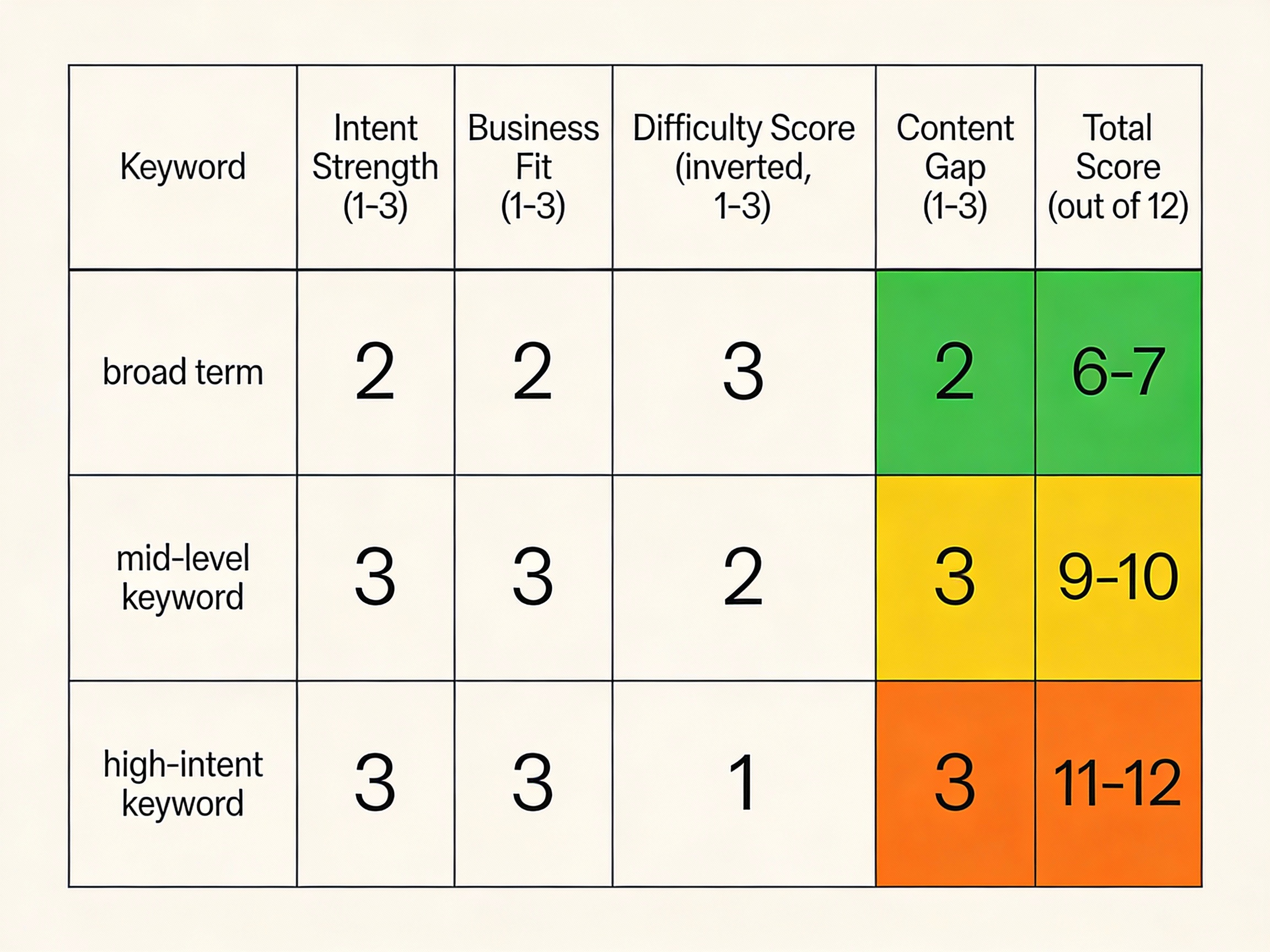
Factor 1: Intent Strength (1–3)
-
1 = mostly informational
-
2 = commercial investigation
-
3 = clear transactional intent
Factor 2: Business Fit (1–3)
-
1 = loosely related to what you sell
-
2 = related but indirect
-
3 = tightly aligned with a core offer
Factor 3: Difficulty and Competition (1–3)
-
1 = you already have a strong page for this
-
2 = you have something but it's weak or misaligned with intent
-
3 = you have nothing targeting this keyword
Add the four scores for a total out of 12. Higher scores indicate better candidates for near‑term work.
For example:
-
"keyword research" → Intent 1, Fit 2, Difficulty 1, Gap 3 = 7
-
"keyword research service pricing" → Intent 3, Fit 3, Difficulty 2, Gap 3 = 11
Even with lower search volume, the second keyword is a much stronger near‑term priority if your goal is conversions.
Digging Into Customer Language and Behavior
Sales Call Recordings
Review recent calls to see the exact language prospects use when evaluating your solution. Do they say "keyword research software" or "SEO keyword tool"? Do they ask about "pricing" or "ROI"? These distinctions matter.
Support Tickets and Chat Transcripts
What questions do existing customers ask before purchasing or while onboarding? The language they use is often the language other prospects will search for.
Customer Interviews
Conduct 5–10 interviews asking customers: "What did you search for when you were trying to solve [problem]?" These conversations reveal the exact queries you should target.
Product Reviews and Comments
Read reviews on sites like G2, Capterra, or Trustpilot. What language do reviewers use to describe the product or problem it solves?
Social Media and Forums
Monitor Reddit, industry forums, LinkedIn discussions, and Twitter. What language does your target audience use when discussing pain points related to your offering?
Building Your Interlinkable Content Map
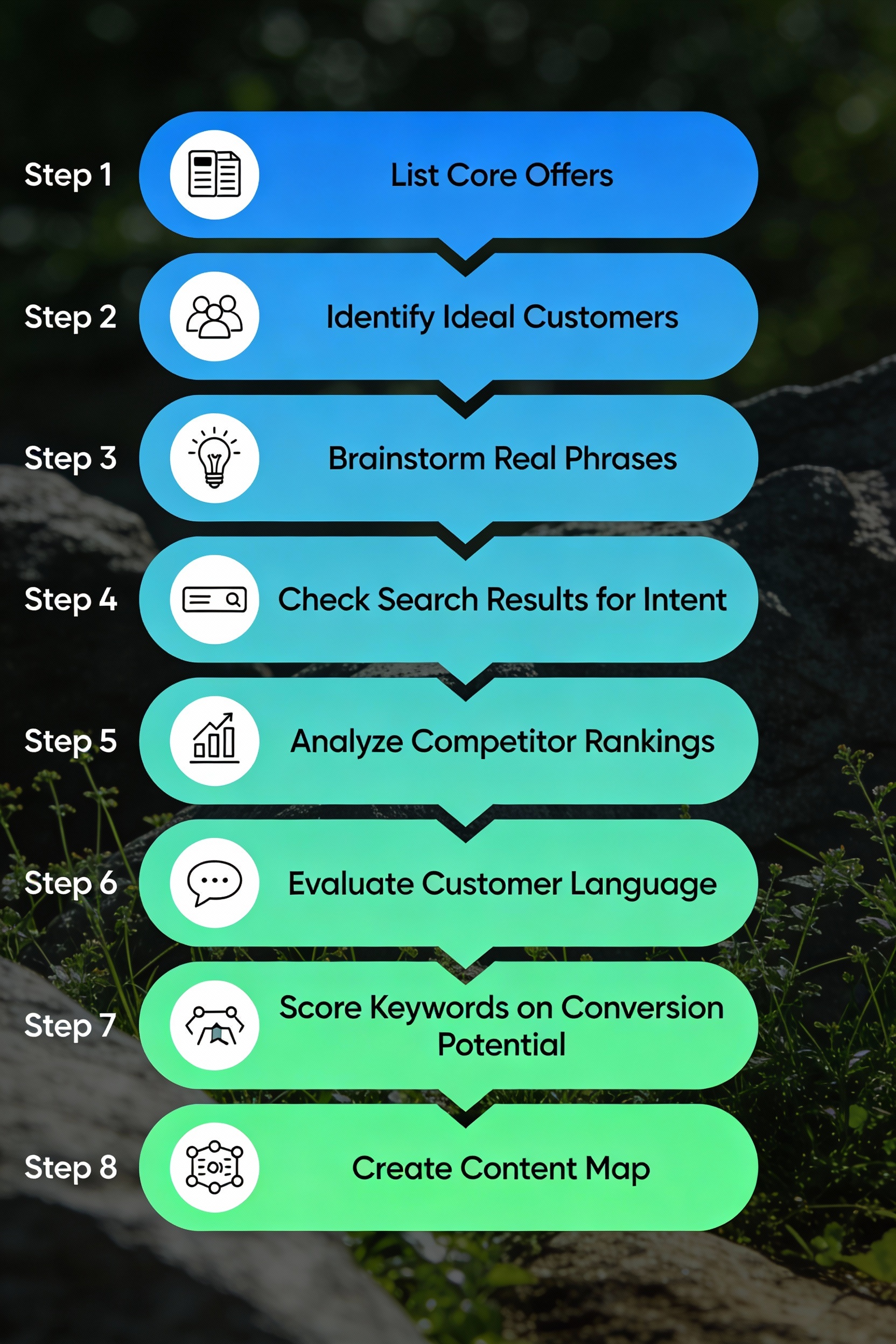
Step 1: Audit Current Content
List every page on your site. For each, note:
-
Current primary keyword
-
Current funnel level (TOFU, MOFU, BOFU)
-
Quality of intent match
-
Whether it links to related pages
This reveals gaps and orphaned content that isn't helping users move through your funnel.
Step 2: Identify Gaps and Opportunities
Based on your keyword research, identify high‑priority keywords you're not yet targeting. These become your new content opportunities.
Step 3: Plan Internal Linking Structure
Map how TOFU content will link to MOFU content, and MOFU to BOFU content. Each link should feel natural—a reader discovering your beginner's guide should naturally find your comparison post, then your pricing page.
For example:
Beginner's guide → "See how we compare to competitors" (link) → Comparison page → "Ready to get started?" (link) → Pricing page
Step 4: Create a Publishing Timeline
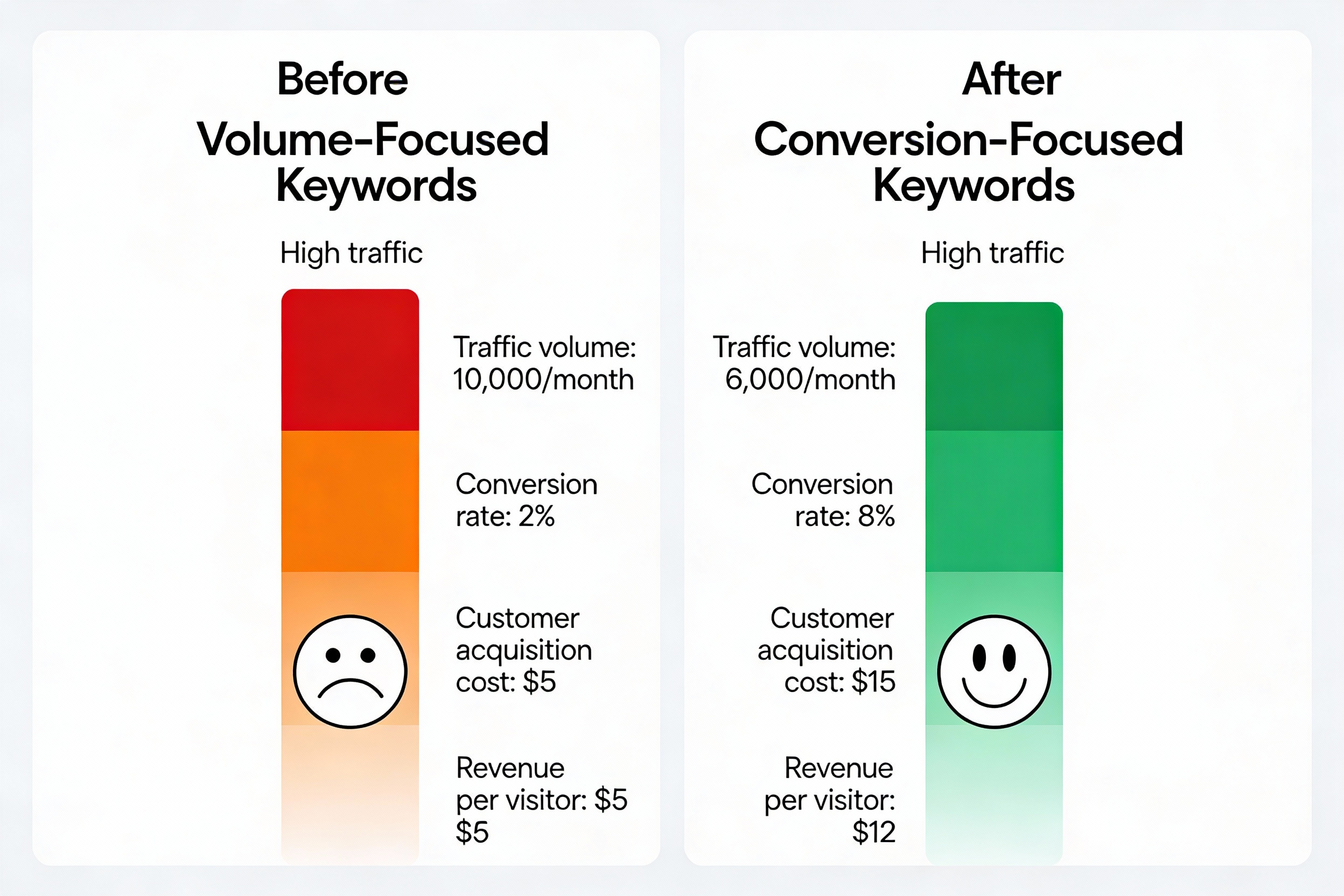
Obsessing Over Volume
A 1,000 search-per-month keyword is worthless if it attracts browsers, not buyers. A 50 search-per-month keyword might be pure gold if all 50 searches are from ready-to-buy prospects.
Ignoring Search Intent
Creating a product page for an informational keyword, or a blog post for a transactional query, guarantees poor performance. Always match content type to intent.
Targeting Competitors' Brand Terms
Ranking for "[Competitor Name]" is tempting, but it's inefficient. Focus on building your own brand authority instead.
Forgetting About Long-Tail Keywords
Long-tail keywords (3+ words) have lower volume but higher intent and conversion rates. They account for over 70% of searches and should make up the bulk of your strategy.
Not Tracking Actual Conversions
If you can't connect keyword rankings to leads or revenue, you're flying blind. Set up proper conversion tracking from day one.
Quick Takeaways
-
Conversion-focused keyword research starts from your offers and customers, not from what sounds "popular."
-
Intent is more important than volume—a high-intent keyword with 100 searches beats a low-intent keyword with 10,000 searches.
-
The SERP tells you what content type is needed—analyze current top results to match intent.
-
Group keywords by funnel stage (TOFU, MOFU, BOFU) to build an interlinkable content strategy.
-
Use a scorecard to prioritize keywords based on intent, business fit, difficulty, and content gaps.
-
Customer language is your best research tool—sales calls, support tickets, and interviews reveal the exact phrases prospects search for.
-
Build for internal linking from day one—each page should naturally link to others in your funnel, helping users move from discovery to conversion.
-
Track conversions, not just rankings—measure what matters: leads, sales, and revenue per keyword.
-
Long-tail keywords are underrated—they're easier to rank for and more likely to convert.
-
Interlink strategically with your other SEO articles—this keyword research guide gains power when linked to on-page SEO, technical fundamentals, common mistakes, and measurement strategies.
Conclusion
Keyword research that converts is a strategic discipline, not a mechanical exercise. It starts with clarity about who you serve and how you help, then uses search data to find the language real buyers use on their way to a decision. When you frame your research around customer intent and business goals, every new page stops being "just another blog post" and becomes a deliberate part of your sales funnel.
Treat keywords as hypotheses about what people want. Validate those hypotheses by examining search results, aligning content types with intent, and tracking the real‑world outcomes on your site. Over time, patterns emerge: which modifiers drive the best leads, which topics attract browsers instead of buyers, which long‑tails are "hidden gems" of conversion. Use those insights to refine your strategy and double down on what works.
The five SEO articles you're building—keyword research, on-page optimization, technical foundations, common mistakes, and measurement—work together to create a complete picture of modern SEO. Start with the keyword research foundation outlined here, then move to "On‑Page SEO Checklist for Modern Websites" to optimize each page for the keywords and intent you've identified. From there, ensure "Technical SEO Basics" isn't limiting your potential. Avoid the pitfalls explained in "SEO Mistakes That Kill Organic Growth," and finally, measure everything using the frameworks in "Measuring SEO Success Beyond Rankings."
If your current keyword strategy has given you traffic but not growth, start migrating from volume‑first thinking to intent‑first thinking. Audit your existing content for misaligned keywords, map future topics around high‑intent phrases, and always ask: What action should someone reasonably want to take after this search—and does my page make that action obvious and easy? When the answer is yes, your keyword research is finally doing its real job: turning searches into sales.
Your next step: List your three core offers, identify your three ideal customer types, brainstorm 20+ high‑intent phrases combining them, score each on the conversion scorecard, and create your first content map. You're now ready to build keyword-driven content that actually converts.
Frequently Asked Questions About Conversion-Focused Keyword Research
Q1: How many keywords should I target?
A: Quality over quantity. Focus on mastering 10–15 high-intent keywords and building comprehensive content around them, rather than targeting 100 generic keywords. Once those convert well, expand strategically.
Q2: What's the difference between search volume and conversion potential?
A: Search volume tells you how many people search for a term. Conversion potential tells you how many of those searchers are likely to buy. A keyword with 1,000 searches and 0.5% conversion is better than one with 5,000 searches and 0.01% conversion. The latter wastes your effort on volume that doesn't convert.
Q3: Should I ignore informational keywords entirely?
A: No. Informational keywords build your funnel and establish authority. But balance them with commercial and transactional keywords that directly drive revenue. A healthy mix: 30% TOFU, 40% MOFU, 30% BOFU.
Q4: How do I know if a keyword matches my offer?
A: Ask: "If someone searched this and landed on my page, would my product or service directly solve their problem?" If yes, it's a match. If maybe, it's MOFU. If no, skip it.
Q5: How long does it take to see conversions from keyword-focused content?
A: 3–6 months for ranking, then another 1–3 months for conversion patterns to become clear. High-intent keywords typically convert faster than informational content. Be patient and track metrics consistently.
Q6: What tools should I use for keyword research?
A: Google Keyword Planner (free), SEMrush, Ahrefs, or Moz for baseline data. But pair tools with direct customer research (sales calls, support tickets, interviews). Tools show volume; customers show intent.
Keep Reading: The Complete SEO Framework
This article on keyword research pairs perfectly with four other comprehensive guides:
-
"On-Page SEO Checklist for Modern Websites" – Once you've found your high-intent keywords, optimize every page element to match user intent.
-
"Technical SEO Basics for Non-Developers" – Ensure your site's technical foundation isn't limiting your keyword rankings.
-
"SEO Mistakes That Kill Organic Growth" – Avoid the common pitfalls that waste keyword research efforts.
-
"Measuring SEO Success Beyond Rankings" – Track which keywords actually drive conversions and revenue.
Together, these five articles create a cohesive strategy for building SEO that converts, not just SEO that ranks.
TripleDart. (2025). High-Intent Keywords: What They Are & How to Use Them. Retrieved from https://www.tripledart.com/saas-seo/high-intent-keywords
Graas.ai. (2025). How to Identify High-Intent Keywords and Maximize Conversions. Retrieved from https://www.graas.ai/blog/identify-high-intent-keywords-for-conversions
Seeders. (2025). How to Calculate Keyword ROI. Retrieved from https://seeders.com/blog/how-to-calculate-keyword-roi/
MarketingAid. (2024). Keyword Research in 2025: Your Playbook. Retrieved from https://www.marketingaid.io/new-keyword-research/
SocialSpike. (2025). Understanding Buying Intent Keyword Modifiers. Retrieved from https://socialspike.ca/buying-intent-keyword-modifiers/
Nexus Marketing. (2024). Keyword ROI Exercise Explained. Retrieved from https://nexusmarketing.com/keyword-roi-exercise-explained/
Babylon Love Growth. (2025). Ultimate 2025 Guide: Top Types of Keyword Research. Retrieved from https://www.babylovegrowth.ai/blog/types-of-keyword-research-2025-guide
WhatConverts. (2025). How to Find Your Best High Value, High Intent Keywords. Retrieved from https://www.whatconverts.com/blog/high-intent-keywords/